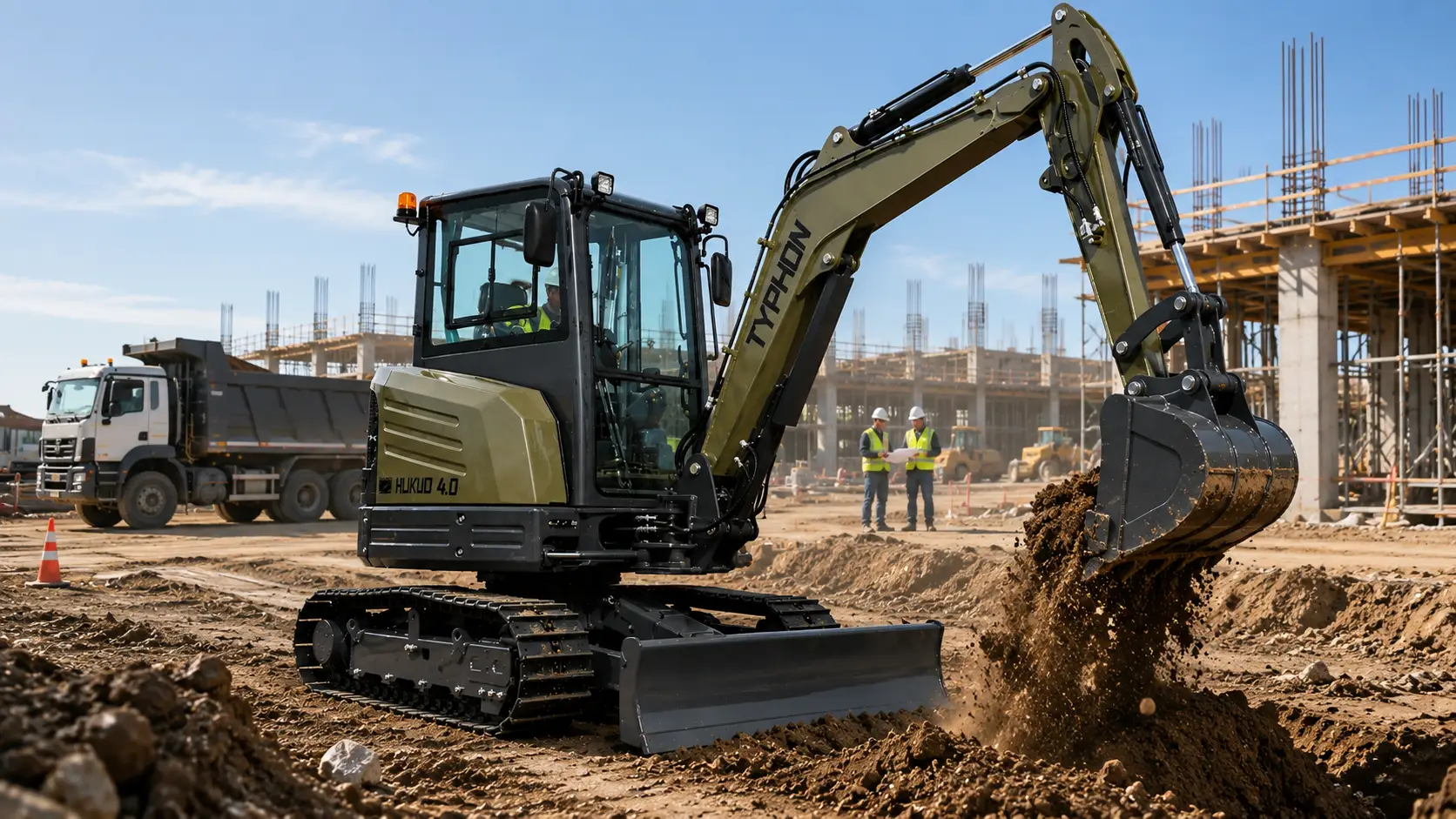
Buying a mini excavator is a major investment for contractors, landscapers, farmers, and utility crews. These machines have quickly become the Swiss Army knives of modern jobsites due to their compact size, high hydraulic power, and attachment versatility. However, with dozens of brands and configurations available, choosing the right unit requires looking far beyond the brand sticker or the price tag. Specifying the wrong machine can lead to wasted fuel, logistics headaches, or equipment that is underpowered for your active workloads.
1. Operating Weight and Transport Logistics
The first and most critical specification to consider is the machine’s operating weight. Operating weight determines not only what the machine can dig and lift, but also how you will move it between jobsites.
- 1-Ton to 1.8-Ton Class: Ideal for residential landscaping, backyard utility trenches, and tight gate entries. These can easily be towed on standard utility trailers behind a half-ton pickup truck without a Commercial Driver’s License (CDL).
- 2.5-Ton to 3.5-Ton Class: The B2B sweet spot. These machines provide substantial digging depth (typically 9 to 10 feet) and high auxiliary hydraulic flow. Transporting them requires a 10,000-lb trailer and a three-quarter-ton truck (e.g., F-250 or equivalent).
Always match the operating weight of your prospective excavator to your existing truck and trailer capacities to avoid unexpected towing upgrades.
2. Dig Depth vs. Reach Requirements
Do not buy a machine that just barely hits your target digging depth. If your crew regularly installs sewer lines at 8 feet, you need an excavator rated for at least 9 or 10 feet of maximum digging depth. Operating a machine at its absolute mechanical limit reduces cycle times, increases fuel burn, and accelerates wear on structural pins and bushings. Ensure your machine has enough reach to dump into high-sided dump trucks without having to crawl up onto soil piles.
3. Hydraulic Systems: Auxiliary Flow & PSI
The core power of a modern excavator lies in its hydraulic system. If you plan to run demanding attachments— such as hydraulic thumbs, post hole augers, concrete breakers, or flail mowers—you must pay close attention to the auxiliary hydraulic flow rate (GPM) and operating pressure (PSI). Many compact machines come with a single standard auxiliary circuit, but advanced units offer dual-direction hydraulics or dedicated high-flow circuits.
A hydraulic thumb is an absolute must-have accessory for 90% of buyers, as it turns your excavator into a precise structural grabber for debris, logs, and concrete chunks.
4. Tail Swing Configurations: Conventional vs. Zero-Tail-Swing
How close will you be working to walls, trees, fences, and active traffic?
- Conventional Tail Swing: The counterweight extends past the tracks when the cab rotates. These machines typically offer slightly higher lifting capacities over the sides and better stability because the center of gravity sits further back.
- Zero-Tail-Swing (ZTS): The house rotates entirely within the width of the tracks. This is the gold standard for road work, foundation digging adjacent to structures, and tight forestry applications. You can rotate 360 degrees without worrying about denting the counterweight or damaging property.
5. Undercarriage Configurations: Rubber vs. Steel Tracks
Choose tracks based on your typical operating surfaces:
- Rubber Tracks: Best for turf, asphalt, concrete, and residential lawns. They minimize surface scarring, operate quieter, and provide a smoother ride for the operator.
- Steel Tracks: Essential for muddy forest floors, sharp rocky terrains, demolition jobsites, and heavy land clearing. Steel tracks resist tears, maintain traction in wet soils, and outlast rubber tracks significantly in severe conditions.
6. Cab Environment & Pilot Controls
An uncomfortable operator is an unproductive operator. If you plan to spend 6+ hours a day in the seat, choose a machine with a fully enclosed cab with Heating, Ventilation, and Air Conditioning (HVAC). Look for machines equipped with smooth hydraulic pilot controls rather than old-fashioned mechanical linkages. Hydraulic pilot controls require minimal operator effort and provide precise feedback, reducing fatigue and increasing safety.
7. Maintenance Access & Serviceability
Daily maintenance should not feel like an archeological dig. Before buying, pop open the rear engine shroud and side access doors. Daily inspection items—such as the engine oil dipstick, air filter, hydraulic fluid sight glass, coolant reservoir, and primary grease fittings—should be accessible from ground level.
Easy-to-access service points guarantee that your operators will actually perform the required daily checks, protecting your machinery from catastrophic component failures.
Summary Checklist for Excavator Buyers
Before signing the papers, make sure you can answer these three questions:
- Can my current truck and trailer safely tow this machine and its attachments?
- Does the auxiliary hydraulic flow match the requirements of the heaviest attachment I intend to operate?
- Is the local dealer stocked with service parts, filters, and pins to support me when a hose blows on a Friday afternoon?
Taking the time to specify the exact parameters of your compact excavator ensures that your investment remains a profitable, highly utilized asset for years to come.
Need help turning this research into a real quote request?
Send the machine category, intended use, or product name to the KUVUO team and we can help you take the next step.
Contact KUVUO