Understanding Excavator Reach vs. Digging Depth
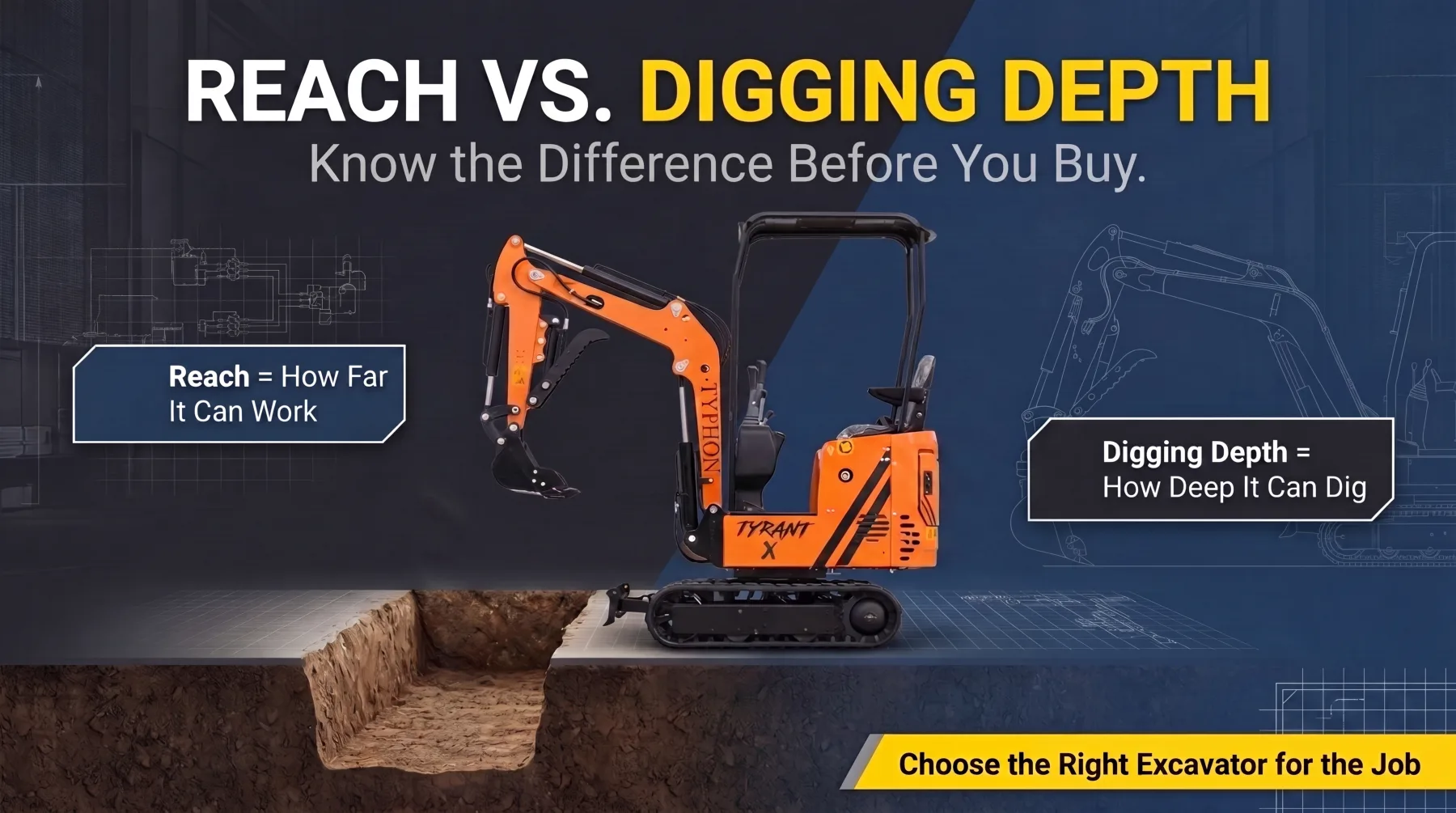
Choosing the right excavator often comes down to two numbers that shape everything the machine can do: reach and digging depth. They sound similar, yet they describe very different capabilities, and confusing the two can leave you with a machine that struggles on the very tasks you bought it for. Reach determines how far the machine can work without moving, while digging depth decides how deep it can excavate below the surface. Understanding both, and knowing how they balance against each other, is the key to matching an excavator to your work. This guide breaks down what each specification means, how they affect job performance, what influences them, how to choose the right figures, and the common mistakes that trip up buyers.
What Is Excavator Reach and Digging Depth?
Excavator reach describes how far the machine can extend its boom and arm to work at a distance from the machine itself. Picture the excavator sitting still with its arm stretched out fully. The horizontal distance from the machine to the point where the bucket can work is its reach. A longer reach lets the operator dig, load, or place material farther away without repositioning the whole machine, which is why reach is such an important figure for projects that cover a wide area or require working across an obstacle. Digging depth, by contrast, measures how deep the excavator can dig below ground level. When the boom and arm extend downward, the maximum distance the bucket can reach beneath the surface is the digging depth. This specification matters enormously for any work that goes underground, since it directly determines whether the machine can reach the required depth in a single setup or whether it falls short of the job's demands. Both specifications deserve equal attention when selecting equipment, because each governs a different dimension of the work: Reach controls how far out the machine can operate horizontally. Digging depth controls how far down it can excavate below the surface. Together they define the working envelope the machine can cover. Understanding both figures is essential to choosing the right excavator for the job. A machine with impressive reach but limited digging depth may excel at surface work yet fail at deep trenching, while one built for depth may not extend far enough for spread-out tasks. Reading these specifications with a clear understanding of what they represent ensures you select equipment that fits the true shape of your work.
How Reach and Digging Depth Affect Job Performance
On the job site, reach and digging depth translate directly into how efficiently and effectively an excavator performs. Longer reach improves coverage and reduces the need to reposition the machine, which is a genuine time-saver. When an operator can work a larger area from a single position, the machine spends more time excavating and less time moving, tracking, and resetting. On projects where the excavator must load trucks parked to the side, dig across a barrier, or clear a wide span, that extended reach keeps the work flowing steadily and cuts the interruptions that slow a project down. Greater digging depth serves a different but equally important purpose, and it is essential for work that goes well below the surface. Trenches for drainage or pipework, foundations for buildings, and utility installations all demand a machine that can reach the required depth reliably. If the excavator cannot dig deep enough, the operator is left with an incomplete excavation or forced into workarounds that waste time and compromise the result. For this kind of work, digging depth is not a convenience but a hard requirement. The ideal balance between the two depends entirely on the type of project you are tackling: Wide, spread-out work favors longer reach to minimize repositioning. Deep excavation such as trenches, foundations, and utilities favors greater digging depth. Mixed projects call for a sensible balance of both capabilities. Matching these capabilities to your work is what delivers dependable performance. A project centered on deep utility trenches needs a machine built for depth, while one focused on broad surface work and loading benefits most from reach. Understanding how each specification shapes real-world results lets you prioritize the capability your project genuinely relies on, keeping the operation efficient and productive from start to finish.
Factors That Influence Excavation Capabilities
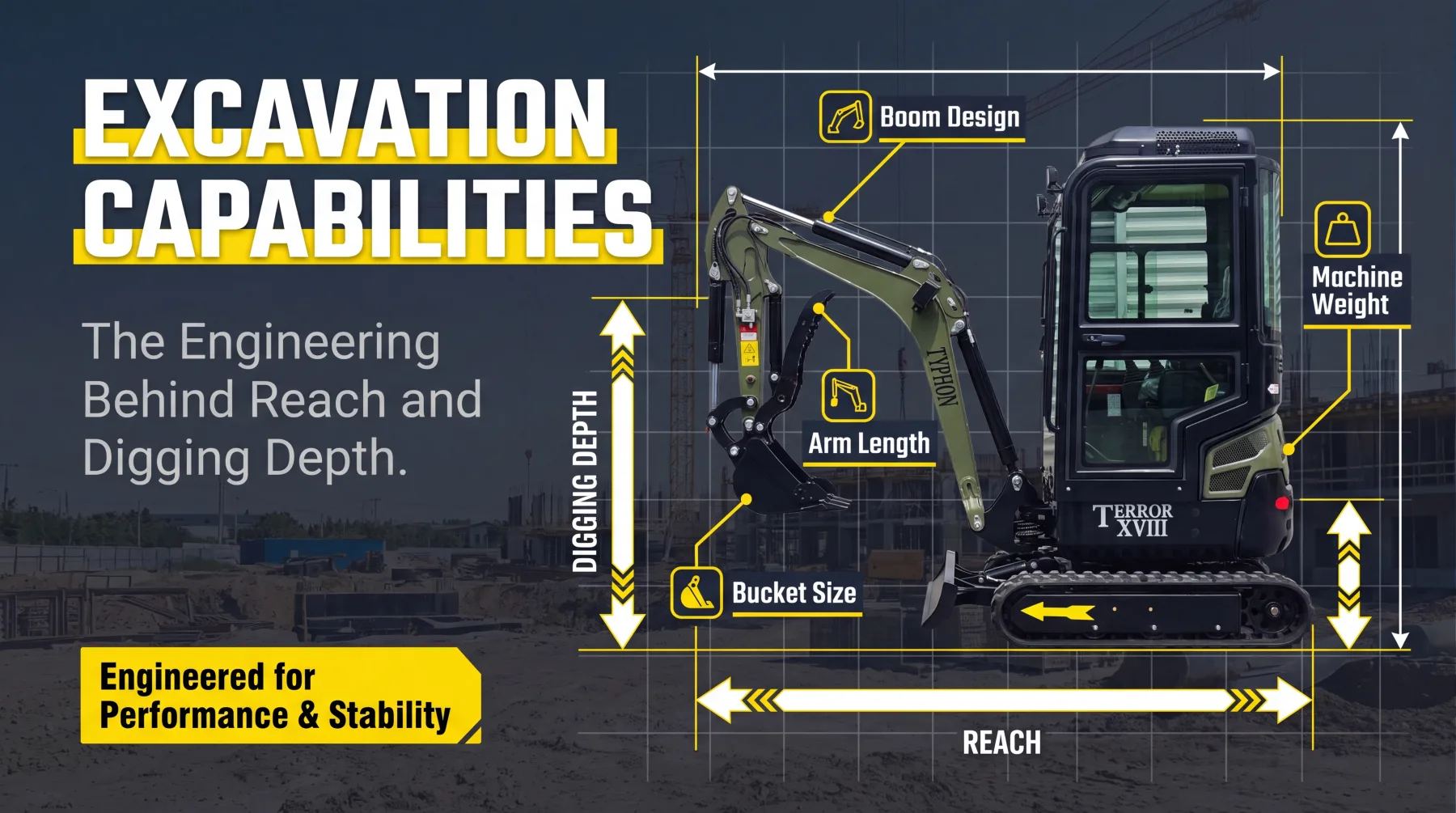
An excavator's reach and digging depth are not arbitrary figures; they result from careful engineering of several key components working together. Boom design is one of the most influential factors. The shape, length, and configuration of the boom determine how far and how deep the machine can extend. Some machines use a standard boom suited to general work, while others offer specialized boom designs built to maximize either reach or depth for particular applications. The boom sets the foundation for the machine's entire working range. Arm length and bucket size build on that foundation and shape the machine's capabilities further. A longer arm extends both reach and digging depth, letting the bucket travel farther out and deeper down, which is why arm options vary across models built for different tasks. Bucket size, meanwhile, affects how the machine performs within that range. A larger bucket moves more material per pass but adds weight and can influence how the machine handles at full extension, while a smaller bucket suits precise or deeper work where control matters most. Machine weight ties these elements together and underpins stable, capable operation. Several components combine to define what an excavator can achieve: Boom design establishes the machine's fundamental working range. Arm length extends both reach and digging depth. Bucket size balances material capacity against control and weight. Machine weight provides the stability needed to work safely at full extension. Manufacturers optimize these components carefully to suit different applications and operating conditions. A compact machine built for tight urban work is engineered differently from a large excavator designed for deep, heavy excavation. By balancing boom, arm, bucket, and weight for a specific purpose, manufacturers produce machines that perform reliably within their intended role. Understanding how these factors interact helps buyers see beyond the headline numbers to the engineering that makes real-world performance possible.
Choosing the Right Specifications for Your Project
Selecting the right specifications begins with recognizing that not every project requires maximum reach or the deepest digging capability. It is tempting to assume that bigger numbers are always better, but a machine built for extreme reach or depth often carries added size, weight, and cost that many jobs simply do not need. The smarter approach is to look honestly at the work you perform most often and choose specifications that match those genuine demands rather than chasing capability you will rarely use. Matching the excavator's specifications to your workload improves efficiency, productivity, and operating costs all at once. A machine sized appropriately for your typical tasks works comfortably within its range, completing jobs without strain and without the expense of unnecessary capability. Consider the nature of your projects carefully, weighing factors such as how far you typically need to work, how deep you need to dig, and the conditions of your sites, so the machine you choose fits the reality of your operation. A few practical questions help guide the decision toward the right fit:
How deep does your typical work require you to excavate?
How wide an area do you usually need to cover from one position?
What site conditions and space constraints do you commonly face?
How often do you tackle demanding deep or long-reach tasks?
Answering these honestly points you toward a machine matched to your real needs. A contractor focused on residential utility trenches has very different requirements from one loading material across a large commercial site, and the right specifications reflect that difference. Choosing a machine that fits your workload rather than overreaching for maximum figures keeps productivity high while controlling both purchase and operating costs. That balanced, informed decision is what ensures your excavator serves your projects dependably and economically for years to come.
Common Mistakes When Comparing Excavator Specifications
The most common mistake buyers make is focusing on a single specification while overlooking the bigger picture. It is easy to fixate on maximum reach or impressive digging depth and assume that number alone determines whether a machine suits the job. In reality, an excavator's performance depends on how several specifications work together, and judging a machine by one figure in isolation often leads to choosing the wrong equipment. A loader with outstanding reach may disappoint if its lift capacity or stability cannot support the work you actually do. A more accurate assessment considers reach, digging depth, lift capacity, and overall stability as a connected whole. Lift capacity matters because a machine must handle the weight of the material it excavates and moves, especially at full extension where capacity typically drops. Stability is just as critical, since an excavator working at the limits of its reach or depth must remain firmly planted and safe. Evaluating these factors together gives a far truer sense of how a machine will perform under real working conditions than any single number can provide. Avoiding these pitfalls comes down to a more complete evaluation: Reach for how far the machine can work horizontally. Digging depth for how deep it can excavate below the surface. Lift capacity for the weight it can handle safely, especially at extension. Stability for secure, safe operation at the limits of its range. Weighing all of these specifications together protects you from a costly mismatch. A machine that looks ideal on one measure may fall short once you account for the others, so a balanced view of the full specification set reveals which excavator truly fits your work. Taking the time to compare machines across every relevant capability, rather than settling on a headline figure, is what leads to a confident, reliable purchasing decision.
Conclusion
Reach and digging depth are two of the most important specifications an excavator offers, and understanding the difference between them is fundamental to choosing the right machine. Reach governs how far the machine can work horizontally and reduces the need to reposition, while digging depth determines how deep it can excavate for trenches, foundations, and utility work. These capabilities are shaped by boom design, arm length, bucket size, and machine weight, all carefully engineered to suit particular applications. The best choice is never simply the biggest number, but the machine whose specifications match the real demands of your projects. By evaluating reach, digging depth, lift capacity, and stability together rather than in isolation, you gain a true picture of real-world performance and avoid a costly mismatch. Match the machine to your work thoughtfully, and your excavator will deliver efficient, dependable results on every job.
Need help turning this research into a real quote request?
Send the machine category, intended use, or product name to the KUVUO team and we can help you take the next step.
Contact KUVUO