
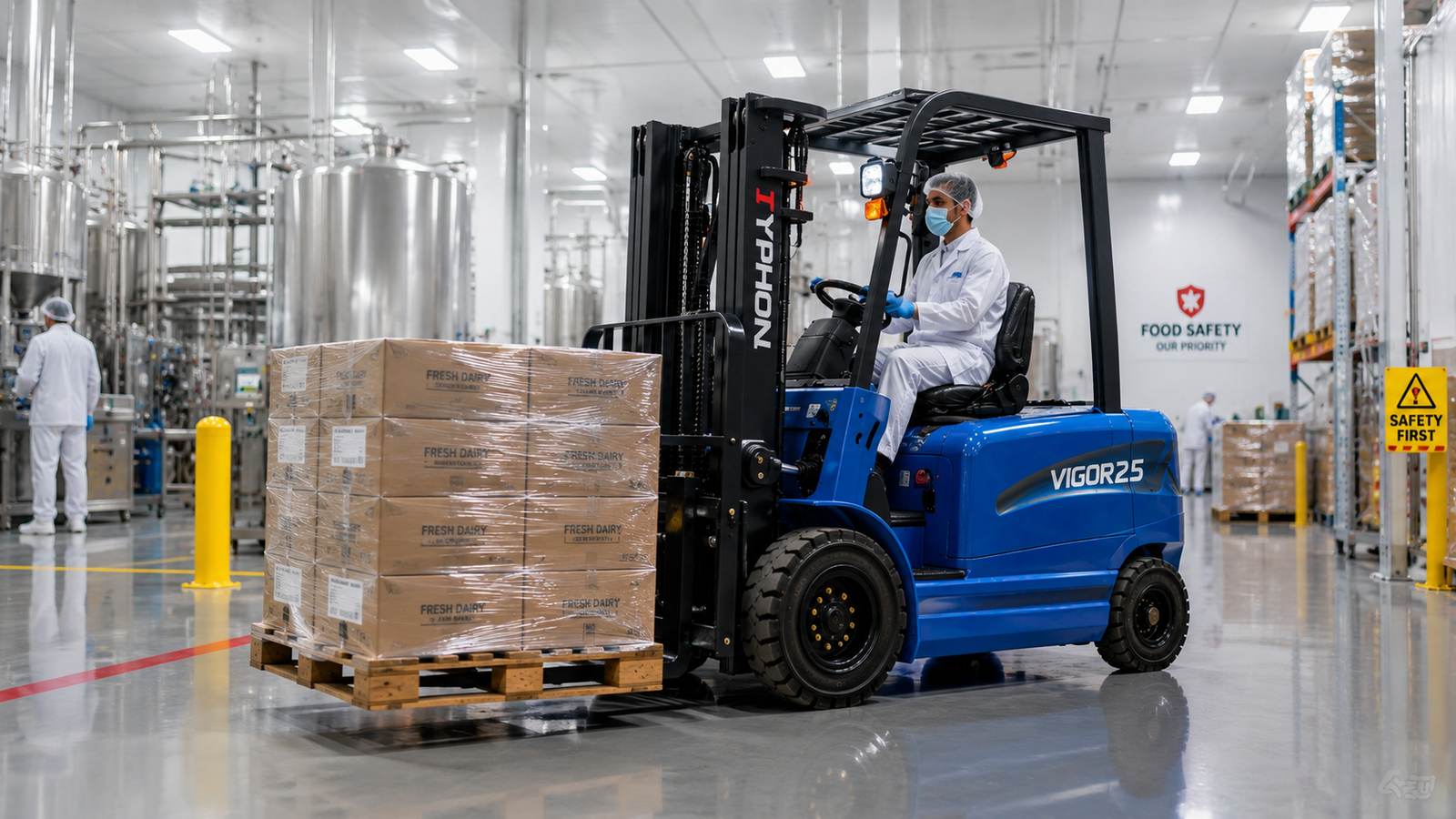
Industrial forklifts are the backbone of modern logistics, shipping docks, and manufacturing plants. They move millions of tons of freight every single day. But their heavy counterweights, narrow wheel bases, and front-loading mechanics also make them highly dangerous when operated carelessly. According to safety statistics, forklift tips and pedestrian strikes are among the leading causes of severe industrial injuries. Developing a strict culture of forklift safety is essential to protecting your workforce and protecting your inventory.
1. Conduct a Rigorous Pre-Shift Inspection
Never climb into the operator’s seat without performing a walkaround visual and physical inspection. An operator’s daily checklist should include:
- Checking tires for dry rot, gouges, or low air pressure (on pneumatic models).
- Inspecting the mast, chains, and forks for cracks, bending, or hydraulic fluid leaks.
- Testing warning alarms, horn, backup lights, and emergency beacons.
- Ensuring that seatbelts and overhead guards are fully functional and undamaged.
If you identify any issue during the inspection, tag the machine as Out of Service immediately and notify your shop manager.
2. Master the "Stability Triangle"
Unlike standard cars, forklifts operate on a three-point suspension system consisting of the two front drive tires and the center pivot of the rear steering axle. This creates a geometric "stability triangle". The forklift’s center of gravity (CG) shifts dynamically as you lift and carry loads. To prevent a catastrophic tip-over:
- Always carry loads as low to the ground as possible (typically 2 to 4 inches from the floor) during transport.
- Never make sharp turns at high speed, especially when carrying a load.
- Ensure the load is centered on the forks and tilted back slightly to lock the center of gravity over the drive axle.
3. Enforce Strict Pedestrian Separation Zones
More than half of all forklift accidents involve pedestrians. Establish designated walkways throughout your warehouse and enforce a strict 10-foot boundary rule between pedestrians and operating equipment. Operators must slow down, sound their horn, and verify eye contact before crossing warehouse intersections, doorways, or blind spots. Equipping forklifts with blue LED projection lights on the rear and sides gives pedestrians a clear visual warning of approaching machines.
4. Handle Loads Within Rated Capacities
Every forklift features a factory load plate indicating its safe lifting capacities at specific load centers (typically 24 inches). Exceeding these limits shifts the center of gravity too far forward, lifting the steering wheels off the floor and making control impossible. If a load is exceptionally long or awkwardly shaped, its center shifts forward, which drastically reduces the maximum safe weight the forklift can carry.
5. Correct Dock and Ramp Procedures
Operating a forklift on ramps, docks, and steep inclines requires strict adherence to grade rules:
- When carrying a load: Always drive with the load facing uphill (drive forward up ramps, and back down ramps) to prevent the load from sliding off the forks.
- When empty: Always drive with the forks facing downhill (drive backward up, and forward down) to maintain drive-wheel traction.
- Never attempt to turn a forklift on a ramp or incline, as this almost always results in a lateral roll-over.
6. Ensure Proper Load Securing & Alignment
Before lifting a pallet, adjust the fork spacing to distribute the load weight as widely and evenly as possible. Drive the forks completely into the pallet until the load rests flat against the upright carriage. Inspect the pallet itself for split lumber, missing boards, or dry rot that could collapse under weight, dropping material onto coworkers or damaging stock.
7. Respect the Travel Path
Keep floors clear of oil spills, grease, water, loose cords, and wood debris. A small piece of 2x4 lumber or a single rock can stop a solid cushion tire instantly, causing the load to slide or the forklift to swing wildly. When carrying high loads that obstruct your forward vision, operators must drive the forklift in reverse, looking over their shoulders rather than leaning out to look around the mast.
8. Proper Parking & Shutdown Protocols
A parked forklift should never present a hazard to others. When parking at the end of a shift:
- Park the machine on flat, level ground.
- Fully lower the forks to the floor, tilting them forward slightly so they rest flat against the concrete (preventing trip hazards).
- Put the transmission in neutral and engage the parking brake.
- Turn the key off and remove it to prevent unauthorized operation.
Need help turning this research into a real quote request?
Send the machine category, intended use, or product name to the KUVUO team and we can help you take the next step.
Contact KUVUO