
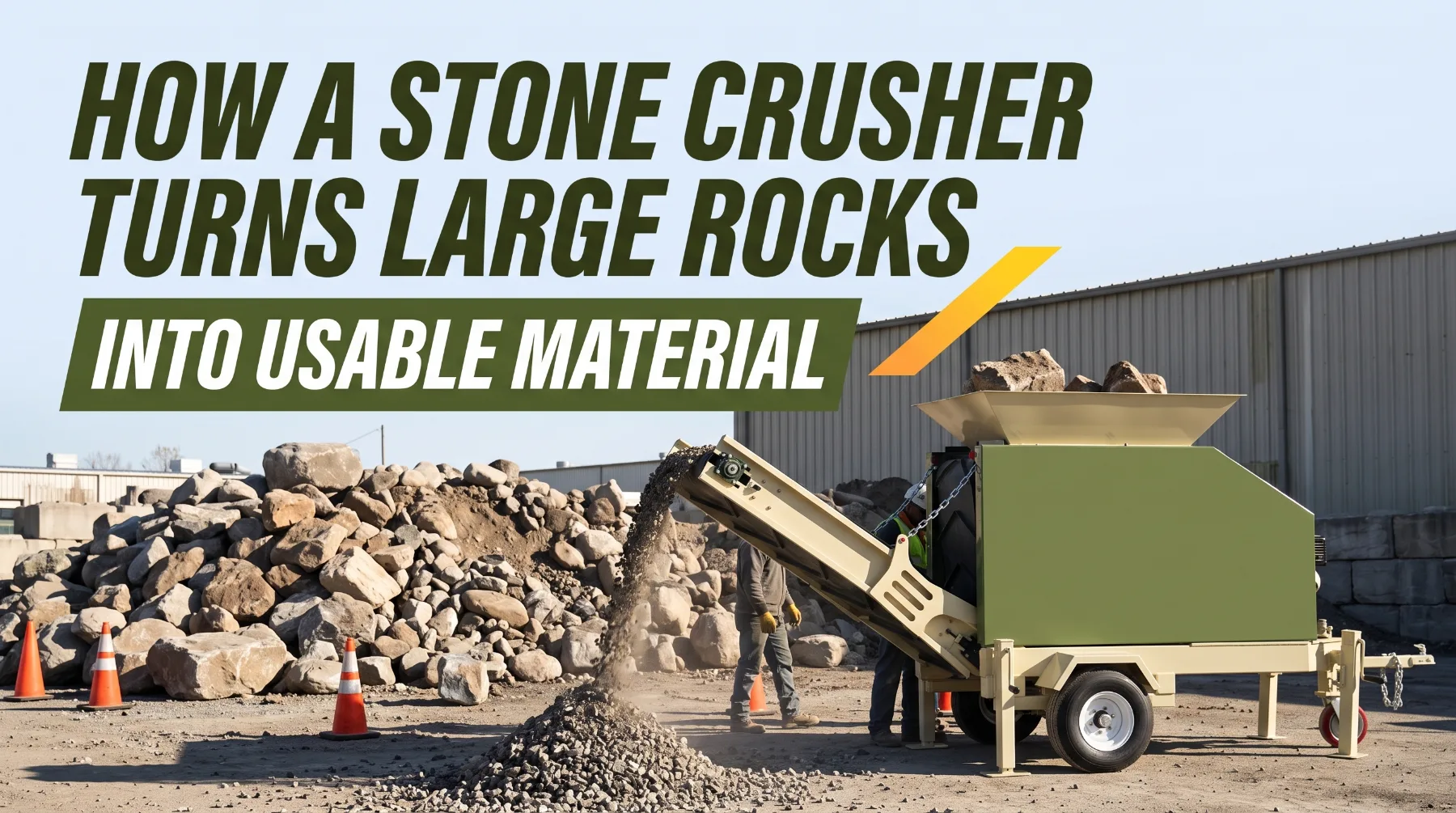
Raw rock straight from a quarry or excavation is rarely ready for use. It arrives in massive, irregular chunks that no road crew or builder can work with directly. That is where a stone crusher earns its place. This powerful machine takes oversized rock and reduces it into clean, consistent material sized for real projects. The transformation happens through a series of well-orchestrated stages, from the moment rock enters the hopper to the point it leaves as finished aggregate. Understanding how each step works helps you appreciate why a well-run crusher is central to any productive site. This guide walks you through the entire process, one stage at a time.
Feeding Large Rocks Into the Crusher
Everything begins at the hopper. Large rocks are loaded into the crusher's hopper, usually by an excavator, wheel loader, or dump truck, where they wait to enter the crushing chamber. The hopper acts as a holding area that keeps a steady volume of material ready, so the crusher never sits idle waiting for its next load. A well-designed hopper gives operators a buffer that smooths out the flow between loading equipment and the machine itself. Controlled feeding is the key to this first stage. Rather than dumping everything at once, material moves into the chamber at a measured, consistent rate. Many crushers use a vibrating feeder or grizzly section to regulate this flow and separate out fines before crushing even begins. This control matters for several reasons:
- It keeps material moving consistently, avoiding surges that overwhelm the chamber
- It prevents jams caused by too much rock entering at once
- It protects the machine from the shock loads that come with irregular feeding
- It helps maintain steady output quality throughout the shift
Feeding discipline also depends on what enters the hopper in the first place. Rocks must fall within the crusher's rated feed size, since material that is too large simply cannot pass through cleanly. Removing tramp metal and uncrushable debris at this stage protects the machine from damage further down the line. When feeding is handled well, the entire crushing process runs smoother and more predictably. A consistent, properly sized flow of rock sets the foundation for efficient reduction, keeping the chamber working at its designed capacity and helping the operation deliver reliable results all day long.
Breaking Rock Inside the Crushing Chamber
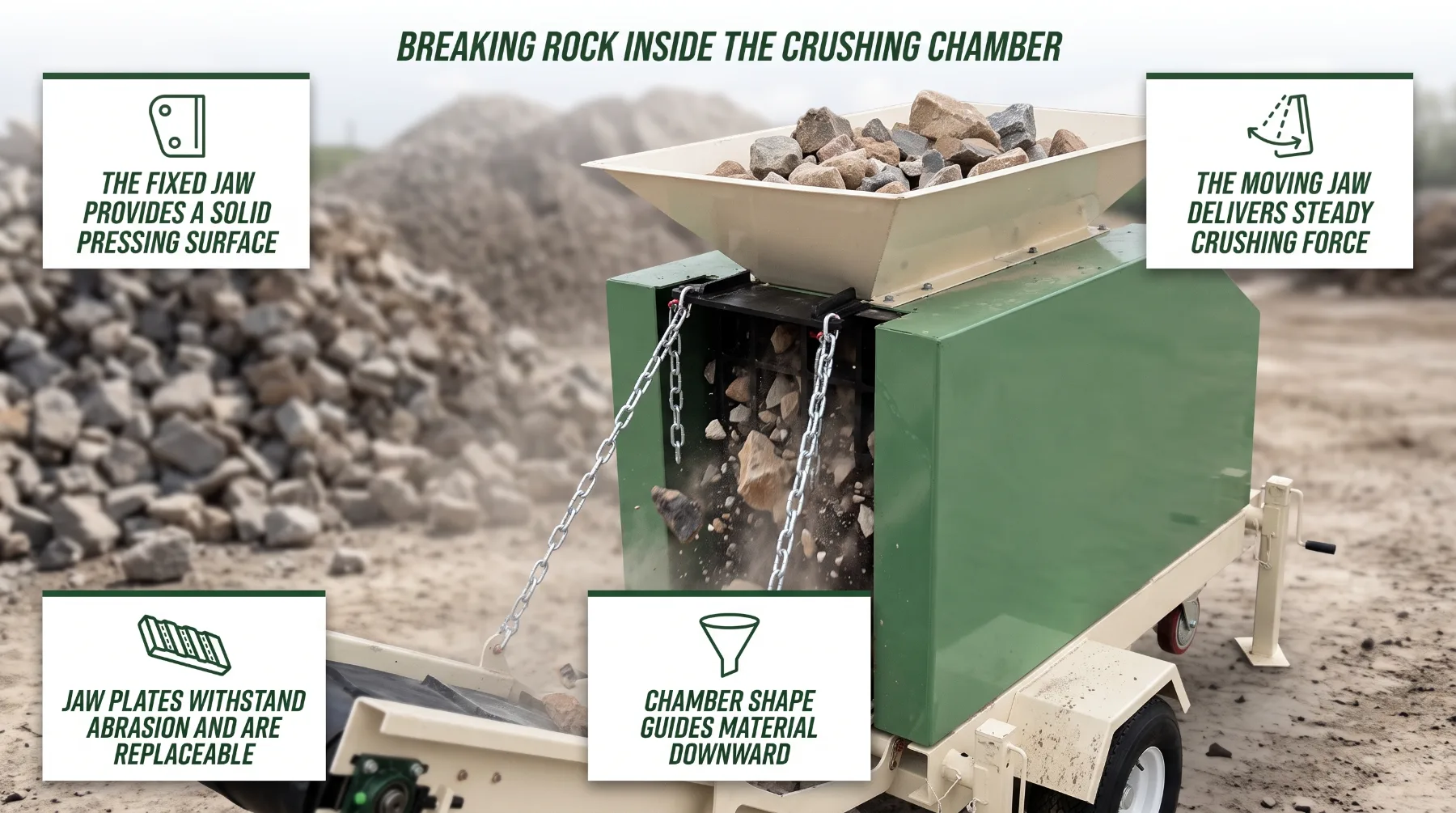 Once rock enters the crushing chamber, the real work begins. The crusher applies powerful mechanical force to break large pieces into smaller, more manageable fragments. This is the heart of the entire operation, where raw material meets the force that reshapes it. The chamber is engineered to concentrate tremendous pressure on the rock, fracturing it along its natural weak points until it breaks down into the size range the operator needs. In a jaw crusher, the most common type for primary crushing, this happens through compression. The material is squeezed between a fixed jaw and a moving jaw. As the moving jaw swings toward the fixed one, it presses the rock with immense force, cracking it apart. When the jaw swings back, the broken pieces drop lower into the narrowing chamber, where they get compressed again. This repeating cycle continues until the fragments are small enough to pass through the bottom opening. Several elements work together to make this process effective:
- The fixed jaw provides a solid surface for the rock to press against
- The moving jaw delivers the crushing force in a steady, cyclical motion
- The jaw plates withstand constant abrasion and can be replaced as they wear
- The chamber shape guides material downward as it breaks into smaller sizes
The force involved is substantial, which is why crushers are built with heavy-duty frames and durable wear parts. The gradual, staged reduction inside the chamber ensures rock breaks down evenly rather than unpredictably. This controlled crushing action is what allows a single machine to turn boulders into workable material, cycle after cycle, while maintaining the consistency that quality aggregate demands.
Controlling the Final Material Size
Crushing rock is only useful if you can control how small the pieces end up. Different projects call for different material sizes, and a good crusher gives operators the ability to dial in the output they need. The two main factors that govern final size are the jaw opening and the discharge setting, often called the closed side setting. Together, these determine how large or small the crushed material will be when it leaves the chamber. The discharge setting controls the gap at the bottom of the crushing chamber. A wider gap allows larger pieces to pass through, producing coarser material. A narrower gap holds rock in the chamber longer and forces it to break down further, yielding finer output. By adjusting this setting, operators can shift production to match the specific requirements of the job at hand. This adjustability gives an operation real flexibility across different needs:
- A wider setting produces larger aggregate suited to base layers and fill
- A narrower setting creates finer material for surfacing and detailed work
- Incremental adjustments let operators fine-tune output as project demands change
Getting the setting right also affects efficiency. Pushing a crusher to produce material far finer than the machine is set for can slow throughput and increase wear. Matching the setting to the target size keeps production efficient while delivering consistent results. Careful control at this stage is what separates usable aggregate from wasted effort. When operators understand how the jaw opening and discharge setting shape the output, they can produce exactly the material a project requires. This precision turns a powerful crushing machine into a reliable source of graded, purpose-built material.
Moving Crushed Material Through the Conveyor
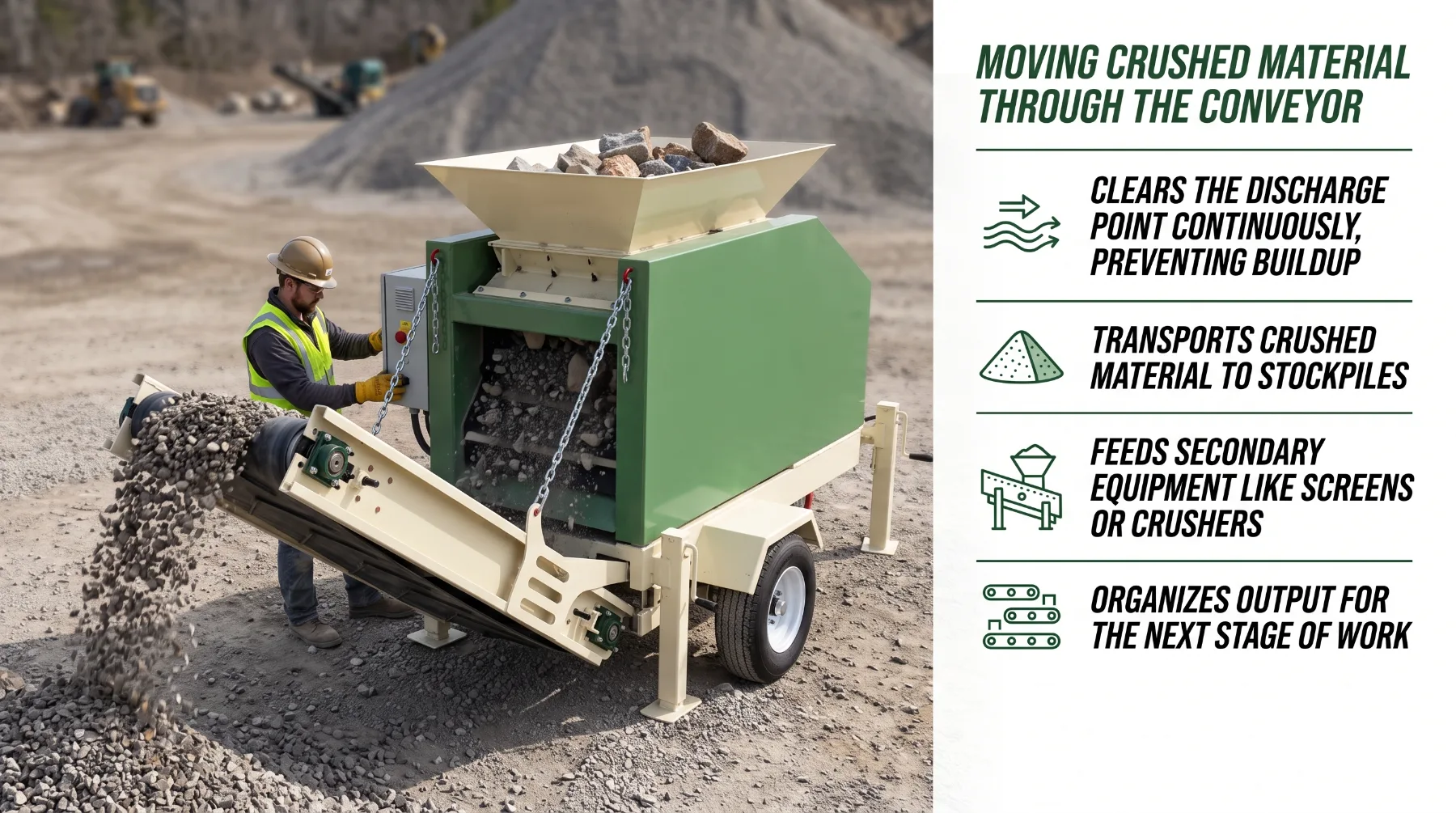 After the rock has been reduced to the right size, it needs to leave the crusher and head toward its next destination. This is the conveyor's job. Once material passes through the discharge opening, it drops onto a conveyor system that carries it away from the machine. The conveyor keeps the process flowing by continuously clearing crushed material, so the chamber stays open and ready for the next round of rock. The conveyor does more than simply move material from one point to another. It plays a central role in keeping the whole operation running smoothly and efficiently. By transporting the processed material to a stockpile or onward to further processing, it prevents buildup at the crusher's outlet that would otherwise cause blockages and force costly stoppages. Conveyors support the crushing operation in several important ways:
- They clear the discharge point continuously, preventing material buildup
- They transport crushed material to stockpiles for storage or loading
- They feed secondary equipment such as screens or additional crushers
- They organize output so material is ready for the next stage of work
Because conveyors run almost constantly, their condition directly affects productivity. Belts, rollers, and tensioning all need to stay in good working order to keep material moving without spillage or interruption. A misaligned belt or worn roller can slow the entire process, which is why routine attention to the conveyor pays off in steady output. When the conveyor works reliably, crushed material flows away from the machine in a clean, continuous stream. This keeps the crusher productive and moves the finished product one step closer to where it will actually be put to use.
Producing Usable Aggregate
The end result of all this work is usable aggregate, the graded material that construction and landscaping projects depend on every day. Once the crushed rock reaches the stockpile, it is ready to serve a wide range of practical applications. What began as oversized, unworkable boulders has become a consistent, purpose-built product that crews can put straight to work. Crushed aggregate supports many common needs across the industry:
- Road base that provides a stable, compacted foundation beneath pavement
- Construction fill used to level, support, and build up work areas
- Landscaping material for pathways, drainage beds, and decorative features
- General aggregate blended into concrete, asphalt, and other building mixes
The specific size of the finished material determines how it can be used. Coarser aggregate works well for structural base layers and drainage, where larger pieces provide strength and allow water to pass through. Finer material suits surfacing, bedding, and applications that call for a smoother, more compact finish. This is why the size control discussed earlier matters so much, since the intended use dictates the output the operation needs to produce. Consistency is what gives crushed aggregate its value. Projects rely on material that meets predictable size and quality standards, so a well-run crushing process delivers not just broken rock, but a dependable product engineered to specification. From the first load in the hopper to the finished stockpile, every stage contributes to that reliability. The result is material you can trust to perform, whether it is forming the base of a new road or shaping a landscaped space.
Conclusion
Turning large rocks into usable material is a carefully sequenced process, and each stage builds on the one before it. Controlled feeding delivers rock into the chamber at a steady pace, mechanical force breaks that rock into smaller pieces, and adjustable settings shape the material to the exact size a project requires. From there, the conveyor clears the crushed product and moves it toward the stockpile, where it becomes dependable aggregate ready for road base, fill, landscaping, and more. Understanding how these stages fit together helps you get the most from a crushing operation. When feeding stays disciplined, wear parts are maintained, settings match the target output, and the conveyor runs cleanly, the whole process delivers consistent, high-quality material shift after shift. A stone crusher is more than a powerful machine. It is a reliable system for transforming raw rock into the building blocks of real projects, and knowing how it works helps you keep that system running at its best.
Frequently Asked Questions
1. What size rock can a stone crusher accept?
Every crusher has a rated feed size, which is the largest dimension of rock it can accept through its opening. Feeding material within that limit is essential, since oversized rock cannot pass through cleanly and often causes jams or damage. Before feeding, it helps to remove uncrushable debris and tramp metal as well. If your material regularly exceeds the crusher's feed size, you may need a primary crusher rated for larger rock or a preliminary reduction step. Always check the manufacturer's specifications to confirm the maximum feed size for your machine.
2. How does a jaw crusher actually break rock?
A jaw crusher breaks rock through compression. Material enters the chamber and is squeezed between a fixed jaw and a moving jaw. As the moving jaw swings toward the fixed one, it presses the rock with tremendous force until it fractures. When the jaw swings back, the broken pieces fall deeper into the narrowing chamber and get compressed again. This cycle repeats until the fragments are small enough to pass through the bottom opening. The staged, repeating action ensures rock breaks down evenly into the target size range.
3. How do I adjust the size of the crushed material?
The final material size is controlled mainly by the discharge setting, also known as the closed side setting, which is the gap at the bottom of the crushing chamber. Widening the gap produces coarser material, while narrowing it forces rock to break down further into finer output. Operators adjust this setting to match the requirements of each job. Keep in mind that pushing a machine to produce very fine material can slow throughput and increase wear, so matching the setting to your target size keeps production both accurate and efficient.
4. Why is the conveyor important to the crushing process?
The conveyor clears crushed material from the discharge point continuously, which keeps the chamber open and ready for the next round of rock. Without it, material would build up at the outlet and cause blockages that stop production. Beyond clearing the machine, the conveyor transports finished material to stockpiles or feeds it to secondary equipment such as screens or additional crushers. Because conveyors run almost constantly, keeping the belt, rollers, and tension in good condition is essential for steady, uninterrupted output and minimal material spillage.
5. What can crushed aggregate be used for?
Crushed aggregate serves a wide range of applications depending on its size. Coarser material works well for road base, structural fill, and drainage, where larger pieces add strength and allow water to pass through. Finer material suits surfacing, bedding, and landscaping features like pathways and decorative beds. Aggregate is also blended into concrete and asphalt for construction. The intended use determines the output size you should produce, which is why controlling the crusher's discharge setting matters so much for delivering material that meets each project's requirements.
Need help turning this research into a real quote request?
Send the machine category, intended use, or product name to the KUVUO team and we can help you take the next step.
Contact KUVUO