The dozer blade on an excavator does far more than push dirt. It cuts, spreads, levels, and backfills, turning a digging machine into a genuine ground-shaping tool. At the center of how well it performs sits one often-overlooked specification: dozer depth. How deeply that blade can work below the ground surface influences everything from the precision of your grading to the ease of your backfilling. Understanding this capability helps you judge a machine by what truly matters for site work and choose equipment that delivers dependable results. In this guide, we explain what dozer depth is, how it shapes grading and backfilling, how it balances against machine stability, and what to compare when selecting a machine. Throughout, we reference the TYPHON KUVUO mini excavator as an example of a well-matched machine for this kind of work.
What Is Excavator Dozer Depth?
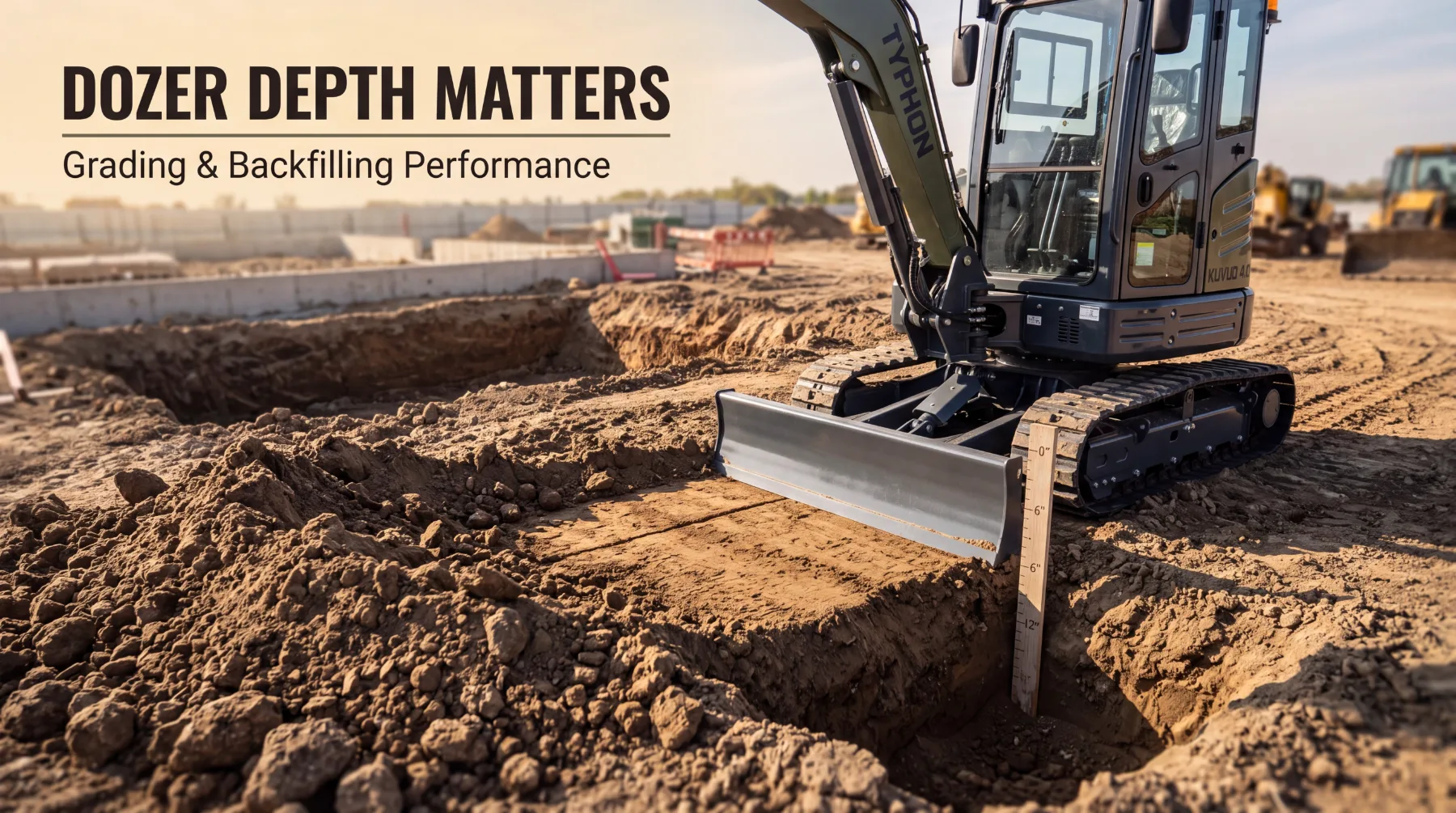
Dozer depth refers to how deeply an excavator's dozer blade can penetrate or work below the ground surface. Most excavators, including compact models like the TYPHON KUVUO, carry a dozer blade mounted at the front or rear of the undercarriage. This blade drops down to make contact with the ground and can push, cut, and level material as the machine moves. Dozer depth measures how far below the surface line that blade can reach when fully lowered, and this simple figure has a real bearing on how effectively the machine can move soil and prepare the ground. The role of this capability becomes clear once you consider what ground preparation actually involves. Rarely is a site perfectly level and ready to build on. Soil sits in mounds, dips, and uneven contours that must be reshaped before any construction begins. A blade that can work below the surface can bite into high spots, shave them down, and carry that material to fill low areas, producing the even, prepared ground that projects require. The blade's reach below grade determines how much control the operator has over this process. A blade limited to skimming the surface can only push loose material around, while one that penetrates below grade can cut into firmer ground and reshape it. This is why dozer depth matters for serious ground work. On a machine such as the KUVUO, the dozer blade works alongside the digging arm, letting the operator excavate and then grade or backfill without switching equipment. That combination makes dozer depth a practical, everyday capability rather than a mere specification on a data sheet, since it directly shapes how the machine prepares and finishes the ground it works on.
How Dozer Depth Affects Grading
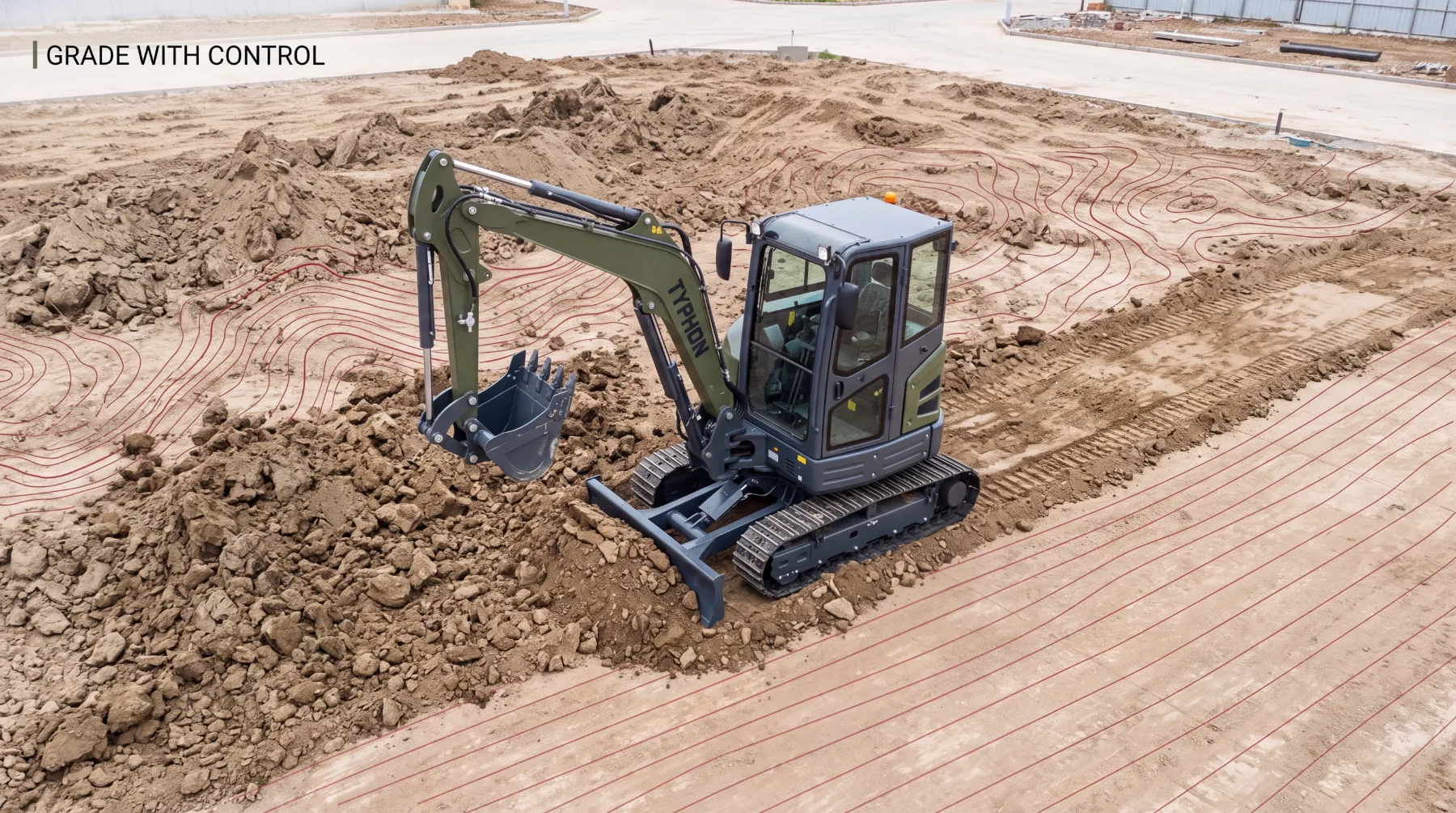 Grading is the work of shaping ground to a desired level or slope, and dozer depth plays a central part in doing it well. A suitable dozer depth allows the blade to cut, spread, and level soil more effectively throughout the grading process. When the blade can reach below the surface, it can slice into high spots rather than simply gliding over them, removing material where the ground sits too high. That same material is then carried and spread across lower areas, and the blade levels it into an even surface. This cut-carry-spread cycle is the essence of grading, and it depends on the blade having enough working depth to engage the ground properly. Greater working depth also provides more control when shaping uneven ground or adjusting elevations. Consider what deeper blade engagement makes possible during grading work:
- Cutting high spots: the blade penetrates firmer, raised ground and shaves it down to the target level rather than riding over the top.
- Adjusting elevations: deeper reach lets the operator lower a surface meaningfully, not just smooth what is already close to grade.
- Finishing uneven terrain: the blade can work through dips and rises, blending them into a consistent, level result.
On a compact machine like the TYPHON KUVUO, this grading capability turns the excavator into a versatile finishing tool. After digging a foundation or trench, the operator can lower the dozer blade and grade the surrounding area to a clean, level finish without bringing in a separate machine. The blade's ability to work below grade gives the operator the precision to shape the ground with confidence, matching the elevation the project calls for. This is why dozer depth is worth weighing carefully when grading is part of your work, since it directly determines how effectively and accurately the machine can level and prepare a site.
Dozer Depth in Backfilling Applications
Backfilling is the natural counterpart to excavation, and here the dozer blade proves its value once again. After a trench has been dug or a foundation set, the excavated soil usually needs to go back into place, filling the void around pipes, cables, or structures. During backfilling, the dozer blade helps push that excavated soil back into trenches and around foundations, turning what would otherwise be slow, manual shoveling into a quick, controlled task the machine handles directly. Adequate dozer depth makes this work considerably easier. When the blade can reach below the surface, it can gather and push soil efficiently, guiding it into the trench and distributing it where it needs to go. This matters because backfilling is not simply about dumping soil back into a hole. The material has to be spread and leveled evenly so the finished ground sits flush and properly filled, without hollows or uneven mounds that could settle or cause problems later. A blade with sufficient working depth distributes and levels material far more effectively than one limited to surface contact. The process benefits from the same cut-carry-spread action that makes grading effective. The blade collects loose excavated soil, pushes it into the trench or against the foundation, then levels it across the area to produce a smooth, even fill. On the TYPHON KUVUO, this lets a single operator excavate a trench, complete the work inside it, and then backfill and level the ground in one continuous workflow, using the same machine throughout. That efficiency is exactly what site restoration demands. By combining a capable digging arm with a dozer blade that works below grade, the KUVUO handles both sides of the job, excavation and backfilling, keeping material moving and the site progressing without the delays that separate machines or manual labor would introduce.
Balancing Dozer Depth and Machine Stability
Dozer depth never works in isolation. It operates as part of a balanced system, working together with blade size, machine weight, track design, and hydraulic performance. Each of these elements influences how well the excavator can push and level material, and a properly matched setup is what allows the machine to maintain stability while doing so. A blade capable of deep engagement is only useful if the rest of the machine can support the forces involved in pushing soil, which is why these factors must be considered as a whole rather than one at a time. Blade size and machine weight are closely linked. A larger blade can move more material in a single pass, but pushing that material demands force, and the machine's weight provides the grounding needed to apply it. Track design contributes here too, since the tracks deliver traction and spread the machine's weight across the ground. Consider how these elements support one another:
- Machine weight anchors the excavator so it can push against resistant soil without being shoved backward or lifted.
- Track design provides traction and a stable base, keeping the machine planted while the blade works.
- Hydraulic performance supplies the force that drives the blade and controls its movement precisely through the cut-carry-spread cycle.
Hydraulic performance ties the system together, because the power and control behind the blade come from the hydraulic system. Adequate hydraulic strength lets the blade engage the ground and move material steadily, while responsive control lets the operator work with precision. When dozer depth, blade size, weight, tracks, and hydraulics are all matched to one another, the excavator stays stable and controlled as it pushes and levels. The TYPHON KUVUO reflects this kind of balanced design, a four-ton-class machine whose weight, tracks, and hydraulic control are matched to support its blade through grading and backfilling. That balance is what turns dozer depth from a number on paper into dependable, stable performance in the field.
Choosing an Excavator for Grading and Backfilling
When grading and backfilling are central to your work, choosing the right excavator means weighing several factors together rather than focusing on any single specification. Dozer depth deserves careful attention, but it should be considered alongside digging performance, blade dimensions, operating weight, and ground conditions. The right combination of these is what improves efficiency across excavation, grading, and site restoration, so evaluating them as a whole gives you the clearest picture of how a machine will perform. Start with the capabilities that most directly govern ground-shaping work. Consider the following together:
- Dozer depth: how far the blade works below grade, which determines how effectively the machine cuts, levels, and backfills.
- Blade dimensions: the width and height of the blade, which influence how much material it moves in each pass and how it fits your site.
- Digging performance: the reach and strength of the excavating arm, since excavation and backfilling usually go hand in hand.
- Operating weight: the mass that anchors the machine and supports stable pushing and leveling.
Ground conditions round out the decision, because the terrain you work on shapes which machine suits you. Soft, uneven, or challenging ground places different demands on a machine than firm, level sites, so the operating weight, track design, and blade capability should all suit the conditions you typically face. A machine well matched to your ground will grade and backfill dependably, while one poorly suited to it will struggle regardless of its specifications. The TYPHON KUVUO illustrates a well-rounded option for this kind of work. As a capable four-ton-class mini excavator with metal tracks, hydraulic control, and a dozer blade, it combines the digging performance, weight, and blade capability that grading and backfilling require in one machine. Defining your typical tasks and ground conditions first, then matching a machine's dozer depth, blade dimensions, digging performance, and weight to those needs, is the dependable path to choosing an excavator that delivers efficient, reliable results in excavation, grading, and restoration work.
Conclusion
Dozer depth is a quietly decisive factor in how well an excavator grades and backfills. It defines how deeply the blade works below the surface, which in turn shapes the machine's ability to cut high spots, spread and level soil, and reshape ground to the elevation a project requires. In grading, sufficient depth gives the operator the control to shape uneven terrain accurately. In backfilling, it makes distributing and leveling excavated soil into trenches and around foundations far easier and faster. Yet dozer depth only delivers when it is balanced against blade size, machine weight, track design, and hydraulic performance, since stability under load depends on the whole system working together. Choosing well means weighing dozer depth alongside digging performance, blade dimensions, operating weight, and ground conditions. A well-matched machine like the TYPHON KUVUO brings these elements together, handling excavation, grading, and site restoration in one dependable package. Match the machine to your ground and your tasks, and it will reward you with efficient, reliable performance.
Frequently Asked Questions
1. What does dozer depth mean on an excavator?
Dozer depth refers to how deeply an excavator's dozer blade can penetrate or work below the ground surface. Most excavators, including compact models like the TYPHON KUVUO, carry a dozer blade mounted at the front or rear of the undercarriage. This blade lowers to contact the ground and can push, cut, and level material as the machine moves, and dozer depth measures how far below the surface line the blade can reach when fully lowered. This capability matters because ground preparation rarely involves perfectly level terrain. Soil sits in mounds, dips, and uneven contours that must be reshaped before construction. A blade that works below the surface can bite into high spots, shave them down, and carry material to fill low areas, producing the even, prepared ground projects require. The blade's reach below grade determines how much control the operator has over moving soil and preparing a site.
2. How does dozer depth improve grading performance?
A suitable dozer depth allows the blade to cut, spread, and level soil more effectively during grading. When the blade reaches below the surface, it can slice into high spots rather than gliding over them, removing material where the ground sits too high. That material is then carried and spread across lower areas, where the blade levels it into an even surface. This cut-carry-spread cycle is the essence of grading, and it depends on the blade having enough working depth to engage the ground properly. Greater working depth also provides more control when shaping uneven ground or adjusting elevations, letting the operator lower a surface meaningfully rather than just smoothing what is already close to grade. On a machine like the TYPHON KUVUO, this turns the excavator into a versatile finishing tool, since the operator can dig and then grade the surrounding area to a clean, level result without switching machines.
3. Why does dozer depth matter for backfilling?
During backfilling, the dozer blade pushes excavated soil back into trenches and around foundations, replacing slow manual shoveling with a quick task the machine handles directly. Adequate dozer depth makes this much easier, because a blade that reaches below the surface can gather and push soil efficiently, guiding it into the trench and distributing it where it needs to go. This matters because backfilling is not simply dumping soil back into a hole. The material must be spread and leveled evenly so the finished ground sits flush, without hollows or uneven mounds that could settle later. The same cut-carry-spread action that aids grading applies here: the blade collects loose soil, pushes it into place, then levels it across the area. On the TYPHON KUVUO, this lets one operator excavate, work in the trench, then backfill and level in a single continuous workflow with the same machine.
4. How does dozer depth relate to machine stability?
Dozer depth works together with blade size, machine weight, track design, and hydraulic performance, and a properly matched setup helps the excavator maintain stability while pushing and leveling. A blade capable of deep engagement is only useful if the rest of the machine can support the forces involved in pushing soil. Machine weight anchors the excavator so it can push against resistant ground without being shoved backward or lifted. Track design provides traction and spreads the machine's weight, keeping it planted while the blade works. Hydraulic performance supplies the force that drives the blade and gives the operator precise control through the cut-carry-spread cycle. When all these elements are matched, the machine stays stable and controlled as it grades and backfills. The TYPHON KUVUO reflects this balanced design, with its weight, metal tracks, and hydraulic control matched to support the blade through demanding ground work.
5. What should I compare when choosing an excavator for grading and backfilling?
Weigh several factors together rather than focusing on one specification. Dozer depth determines how effectively the blade cuts, levels, and backfills below grade. Blade dimensions, meaning the width and height of the blade, influence how much material it moves per pass and how it fits your site. Digging performance matters because excavation and backfilling usually go hand in hand, so the reach and strength of the arm are important. Operating weight anchors the machine and supports stable pushing and leveling. Finally, ground conditions shape the decision, since soft or uneven terrain places different demands than firm, level ground, so weight, tracks, and blade capability should all suit the conditions you face. The TYPHON KUVUO brings these together as a capable four-ton-class machine with metal tracks, hydraulic control, and a dozer blade. Define your typical tasks and ground first, then match a machine's capabilities to those needs.
Need help turning this research into a real quote request?
Send the machine category, intended use, or product name to the KUVUO team and we can help you take the next step.
Contact KUVUO