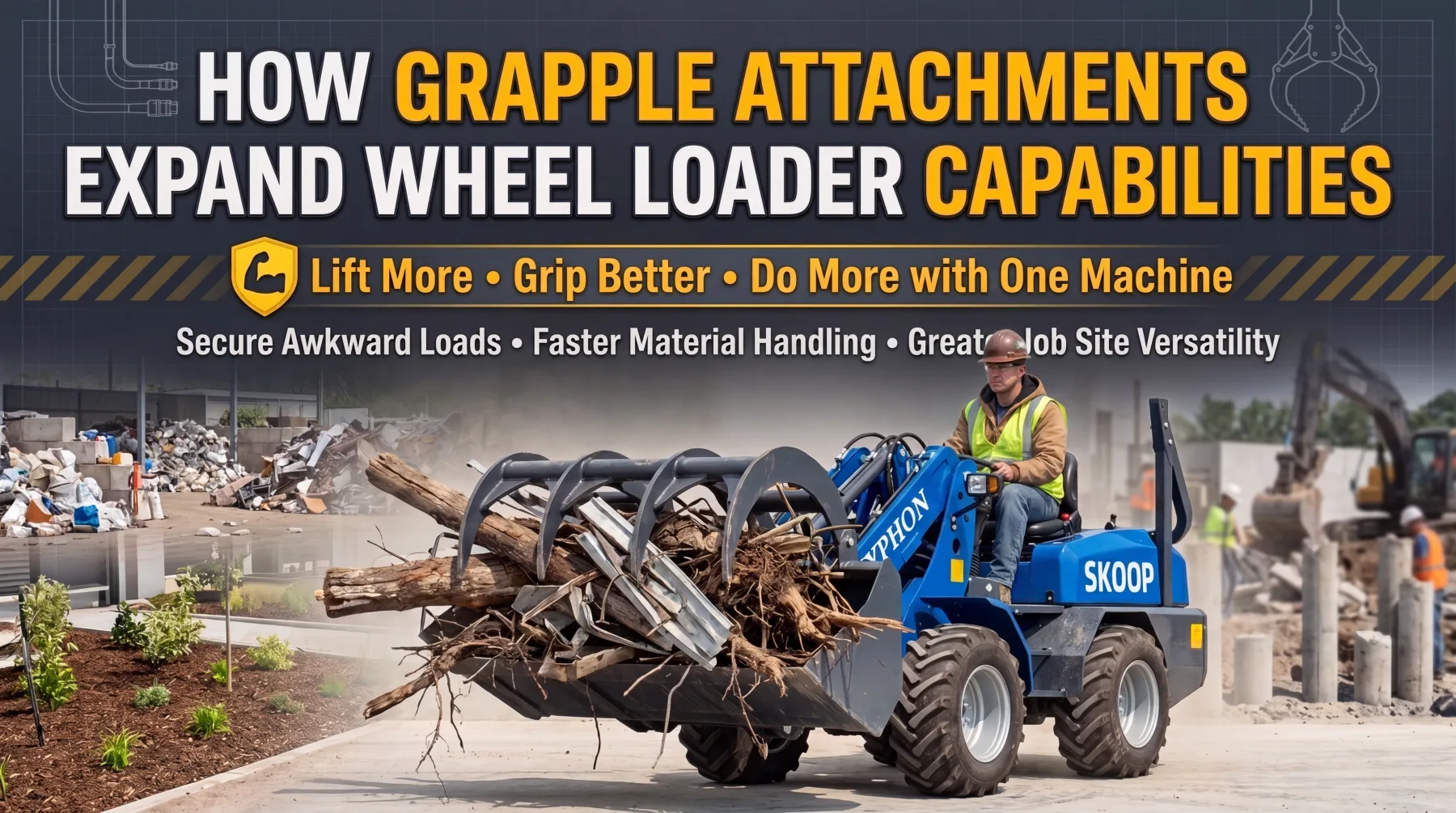
A wheel loader is a capable machine on its own, but the tool on the end of its arm determines just how much it can accomplish. Swap the standard bucket for a grapple attachment, and suddenly the same loader can seize, lift, and move materials it could never handle before. For contractors, operators, and fleet managers looking to get more from their equipment, grapples open the door to faster material handling, better control over awkward loads, and genuine versatility across very different job sites. This guide explains how grapple attachments improve efficiency, help you manage difficult materials, expand what your loader can do, and adapt quickly to changing work, along with how to choose the right design for the job.
Improving Material Handling Efficiency with Grapple Attachments
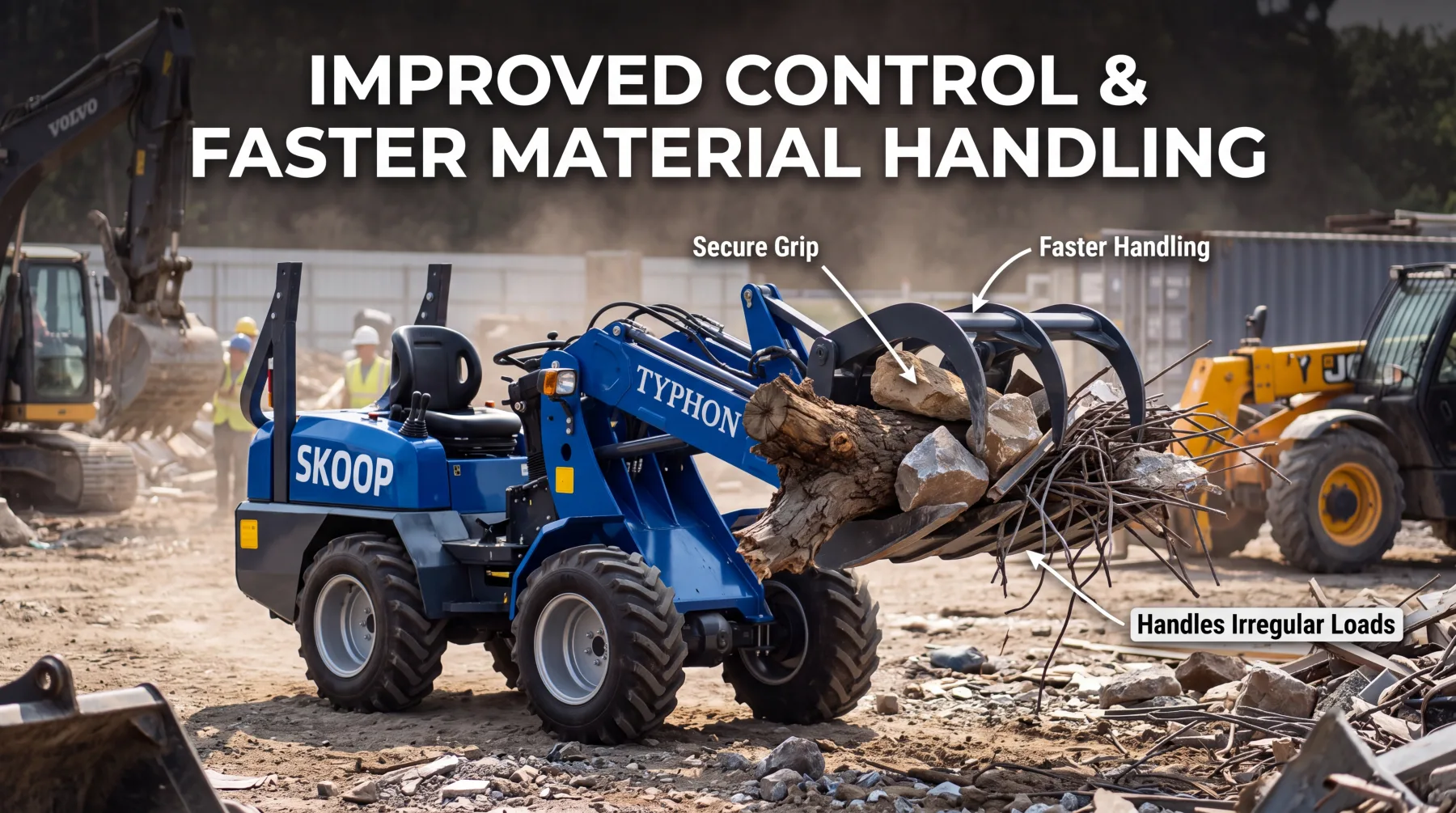
A standard bucket does an excellent job with loose, flowing material like soil, sand, and gravel, but it struggles the moment the load becomes irregular. Logs roll off, debris slides out, and bulky items refuse to stay put. A grapple attachment solves that problem by giving the wheel loader the ability to securely grab, lift, and move materials a bucket simply cannot hold. With one or more hydraulic jaws that close firmly over the load, the grapple grips objects tightly and keeps them in place from pickup to release. That secure hold transforms the loader into a machine capable of handling the messy, awkward loads that define so much real-world work. The productivity gains show up quickly on the job site. Instead of nudging, scooping, and fighting to balance an unwieldy load in an open bucket, the operator simply clamps down and moves it in a single, confident motion. This efficiency matters most when handling the kinds of materials that would otherwise slow a crew to a crawl: Logs and timber that roll and shift, held firmly by the grapple's jaws. Rocks and boulders too large or irregular to scoop cleanly. Debris and scrap from demolition, cleanup, and site preparation. Bulky, oddly shaped loads that a flat bucket cannot contain. By keeping these materials secure throughout the lift and carry, a grapple reduces spills, cuts down on repeated attempts, and lets operators move more material per cycle. That translates directly into faster completion times and less wasted effort across a shift. For a business measuring output by how much its equipment moves in a day, the grapple turns a loader that was limited to loose material into a versatile handler ready for the toughest, most irregular loads on the site.
Handling Difficult Materials with Greater Control
The real strength of a grapple lies in the control it gives the operator. Strong hydraulic gripping force lets the machine clamp down on loose or oversized materials with a hold that a bucket could never provide, and that firm grip changes how confidently an operator can work. Rather than balancing a precarious load and hoping it stays put, the operator secures the material completely, then lifts, moves, and places it with precision. This stability is invaluable when working with items that shift, roll, or threaten to spill, because the grapple keeps everything under command from the moment it closes. That control pays off across a range of demanding tasks. Loading becomes faster because the operator can grab a full, secure load in one pass rather than making several careful attempts. Sorting improves too, since the grapple can pick up individual items or select loads with the accuracy that messy, mixed material requires. Cleanup work, often the most tedious and time-consuming part of a job, moves along quickly when the machine can scoop, grip, and clear irregular debris in efficient, controlled motions. Consider what better control means in everyday operation. An operator clearing a demolition site can grab tangled debris and drop it precisely into a truck or pile without scattering it across the ground. A crew handling oversized rock can lift and position each piece exactly where it belongs. A team sorting scrap can separate materials cleanly instead of moving everything in one messy heap. In each case, the grapple's gripping force turns difficult, unpredictable material into something manageable. The result is work that is not only faster but more precise, with fewer mistakes, less rehandling, and a safer, more organized job site. For operators who deal with challenging loads every day, that reliable control makes the grapple an indispensable tool.
Expanding Wheel Loader Versatility Across Job Sites
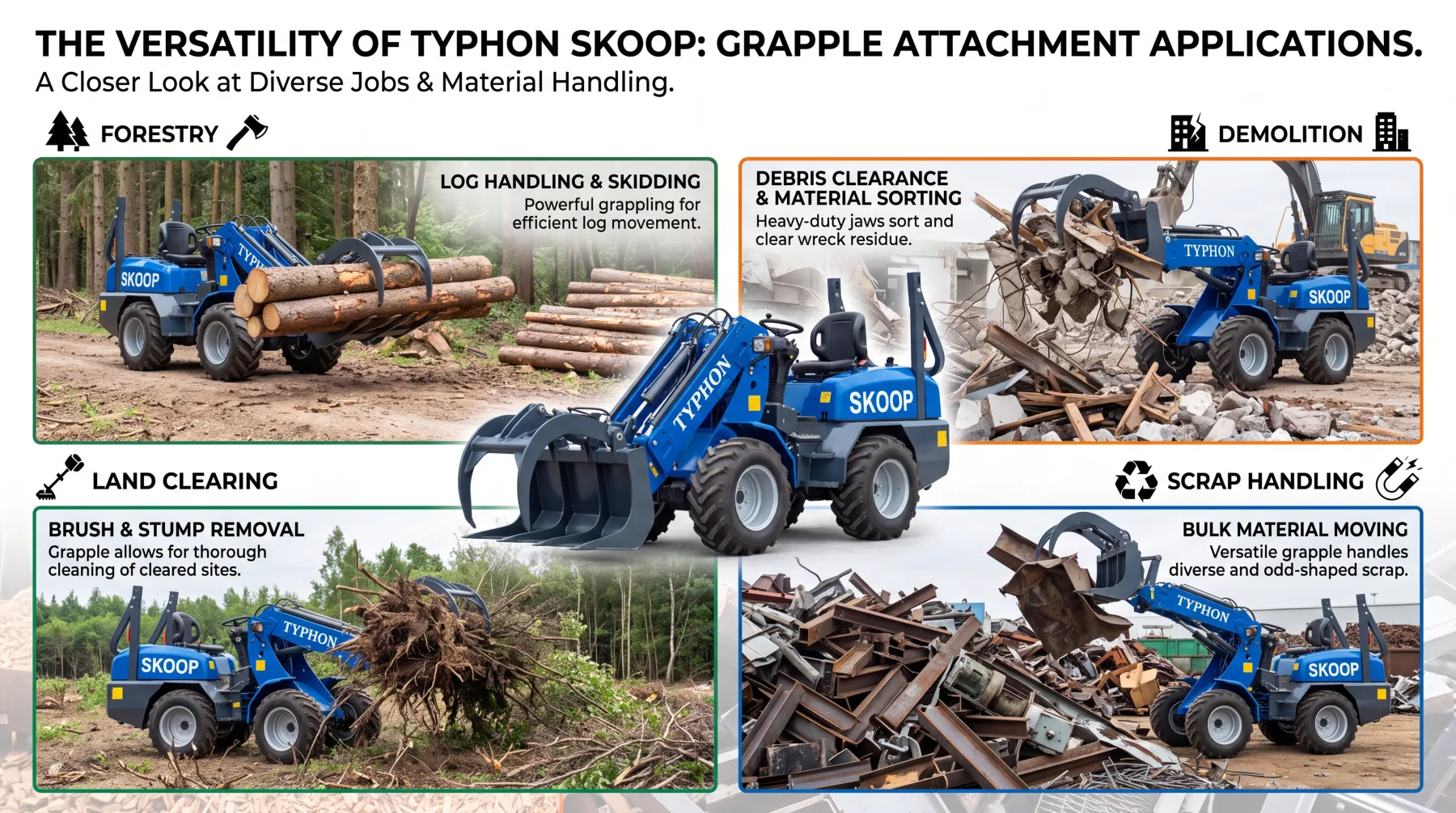
One of the most compelling reasons to add a grapple is the sheer range of work it unlocks. A wheel loader fitted only with a bucket is well suited to digging and loading, but a grapple pushes the machine well beyond those traditional roles. Suddenly the same loader can take on forestry work, demolition cleanup, land clearing, scrap handling, and more, all without the need for a separate specialized machine. That expanded capability means one loader covers jobs that might otherwise require several pieces of equipment, which is a significant advantage for any operation watching its costs and its fleet size. The versatility becomes clear when you look at the different environments where a grapple-equipped loader earns its keep: Forestry: Handling logs, brush, and timber with a secure, controlled grip. Demolition cleanup: Clearing rubble, twisted metal, and mixed debris efficiently. Land clearing: Removing stumps, roots, brush, and other awkward material. Scrap and recycling: Sorting and moving irregular metal and waste. Site preparation: Cleaning up and organizing material before the next phase of work. This adaptability matters because job sites rarely demand just one kind of work. A crew may spend the morning clearing land and the afternoon loading logs, then move on to cleanup as the project progresses. A single loader that can shift between these tasks keeps the whole operation flexible and efficient, ready to respond to whatever the day requires. It also improves the return on the machine, since a loader that stays productive across many applications delivers far more value than one confined to a narrow role. For contractors and fleet managers, that expanded versatility is exactly what makes a grapple attachment such a smart investment, turning a capable loader into a true multi-purpose workhorse.
Choosing the Right Grapple Design for the Job
Not every grapple is built the same, and choosing the right design is essential to getting the performance you need. Different grapple types are engineered for specific materials and working conditions, so matching the attachment to your typical work directly affects how well the machine handles its loads. A grapple built for logs is shaped and reinforced differently from one designed for rock or scrap, and using the wrong type leaves you with an attachment that grips poorly, wears quickly, or simply cannot handle the material efficiently. Understanding the options helps you select a configuration that performs reliably day after day. Several common designs suit different tasks, and knowing their strengths guides a sound decision: Log grapples: Built with curved jaws to cradle and secure round timber firmly. Rock grapples: Designed with sturdy tines that grip stone while letting dirt fall away. Root and brush grapples: Configured to clamp irregular land-clearing debris. Scrap and demolition grapples: Reinforced for the abuse of tangled metal and rubble. Beyond the material, consider the working conditions and the demands you place on the attachment. Heavy, continuous use calls for a robust, durable grapple built to withstand constant strain, while lighter or occasional work allows more flexibility in your choice. You should also confirm the grapple suits your loader's size and hydraulic capacity, since a mismatch limits both performance and safety. Selecting the right configuration protects your investment in more ways than one: it delivers better handling performance, extends the life of the attachment by matching it to appropriate work, and keeps the whole system operating efficiently. Take the time to assess the materials you handle most, the conditions you work in, and the capacity of your machine, and you will end up with a grapple that fits your operation precisely and performs dependably for years.
Boosting Productivity with Quick Attachment Changes
The value of a grapple grows even greater when you consider how easily it can be swapped for other tools. Modern wheel loaders equipped with quick-change systems let operators switch between a grapple, a bucket, forks, and other attachments in minutes rather than spending long stretches on a manual changeover. That speed means the machine can adapt to shifting job requirements almost on demand, moving from gripping logs to scooping soil to lifting pallets as the work calls for it. For a crew facing a full day of varied tasks, that flexibility keeps the loader productive from start to finish. This adaptability delivers a direct benefit to your workflow and your bottom line. Every minute a machine sits idle during a slow attachment change is a minute it is not earning its keep, and those delays add up quickly across a shift. Quick attachment changes cut that wasted time dramatically, letting the operator drop one tool, pick up the next, and get straight back to productive work. The loader spends its hours doing the job rather than waiting between tasks, which keeps projects moving and crews on schedule. The practical result is a more efficient, more capable operation. A single loader that can transition seamlessly between grappling, digging, loading, and lifting handles a wider range of work without the need for multiple machines standing by. That reduces downtime, simplifies fleet management, and improves the overall flow of a job site as conditions change throughout the day. For contractors and fleet managers focused on maximizing every piece of equipment, the ability to swap attachments quickly turns the grapple from a single-purpose tool into part of a flexible, responsive system. Combined with the grapple's own handling strengths, that flexibility ensures your wheel loader stays busy, adaptable, and productive no matter what the job demands.
Conclusion
Grapple attachments transform a standard wheel loader into a far more capable and productive machine. By securely gripping irregular materials that a bucket cannot handle, they speed up loading, sorting, and cleanup while giving operators greater control over difficult loads. Their versatility extends the loader across forestry, demolition, land clearing, scrap handling, and site preparation, reducing the need for multiple machines. Choosing the right grapple design for your material and working conditions ensures reliable, long-lasting performance, while quick-change systems let you swap tools in minutes and keep the machine adapting to whatever the job demands. Together, these advantages make a grapple attachment one of the smartest investments you can make in your wheel loader fleet.
Need help turning this research into a real quote request?
Send the machine category, intended use, or product name to the KUVUO team and we can help you take the next step.
Contact KUVUO