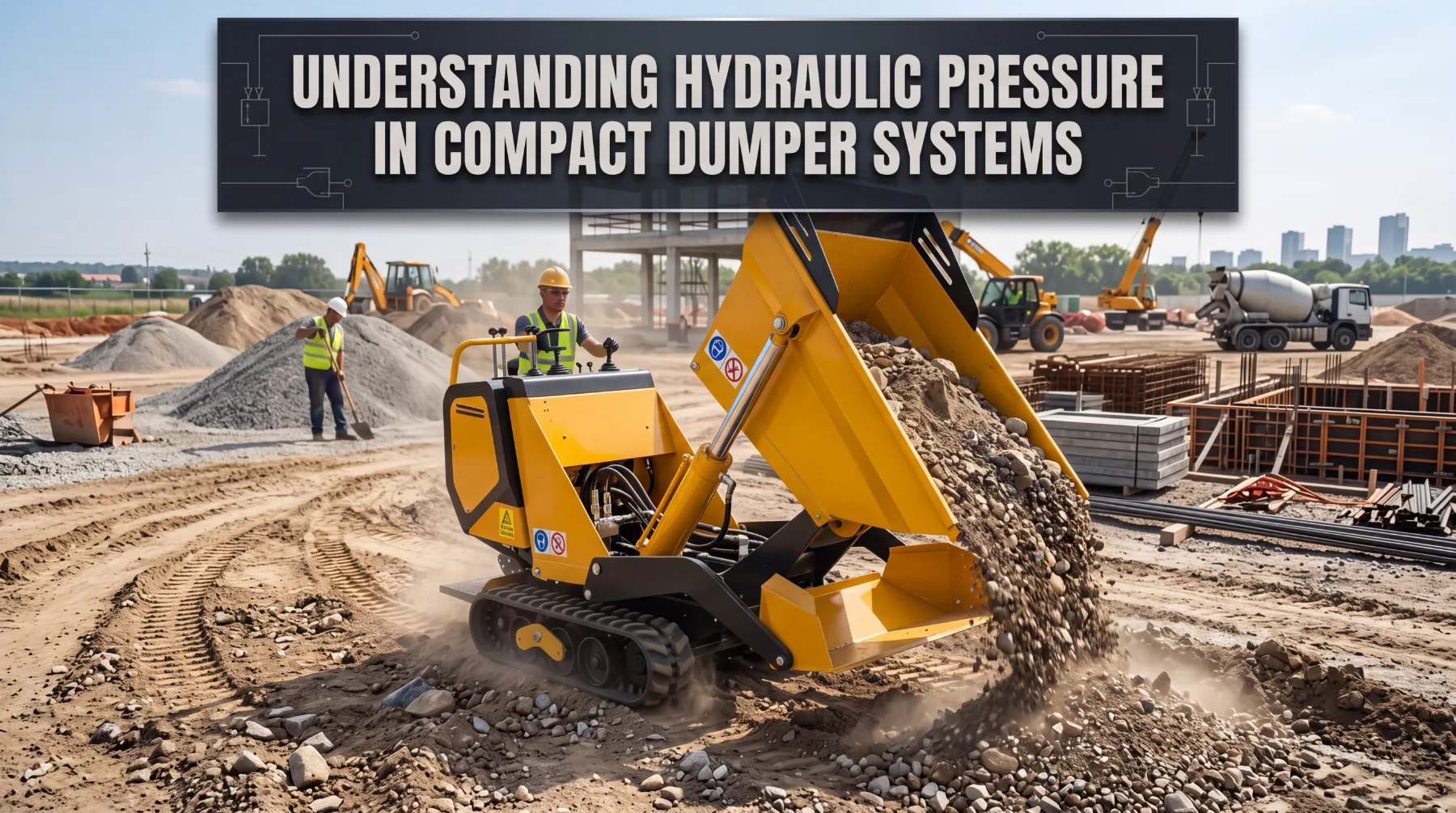
A compact dumper depends on hydraulic power to do its most important work: raising a loaded bed and tipping material where it needs to go. Behind that simple action sits a hydraulic system that generates and controls pressure with precision. When you understand how that pressure works, you gain a clearer sense of what the machine is doing during every dump cycle and why it behaves the way it does under different loads. That understanding helps you operate the dumper confidently and keep it running reliably.
This guide explains hydraulic pressure in compact dumper systems across five practical areas. You will learn what hydraulic pressure does in the machine, how pressure differs from flow, how load weight affects hydraulic demand, which components control pressure, and how to maintain reliable hydraulic performance. By the end, you will have a solid, practical grasp of the system that powers your dumper's work.
What Hydraulic Pressure Does in a Compact Dumper
Hydraulic pressure provides the force needed to operate the dumper's key functions, including lifting the dump bed and driving the hydraulic components that make the machine work. When you engage the tip function, the hydraulic system pressurizes fluid and delivers it to the cylinders, which then push the bed upward against the weight of the material inside. That force is what allows a relatively small machine to raise and empty heavy loads with ease. Without adequate pressure, the cylinders simply could not generate the force required to lift a full bed.
Pressure builds in the system because the fluid meets resistance as it works. When the cylinders push against the load, the fluid pressurizes to overcome that resistance, and the pressure rises in step with the force the task demands. This is why a heavier load produces higher pressure in the system than a light one. The hydraulics respond to the work being asked of them, generating exactly the force needed to move the bed.
Understanding how pressure works helps operators recognize the demands placed on the system during material handling. When you know that the pressure climbs as the load grows heavier, you gain a better feel for how the machine is performing and where its limits lie. This awareness supports smoother operation, since you can sense when the system is working near its capacity and adjust how you load and tip accordingly. A clear grasp of what pressure does turns the machine from a black box into a system you understand and can operate with confidence.
Hydraulic Pressure vs. Hydraulic Flow
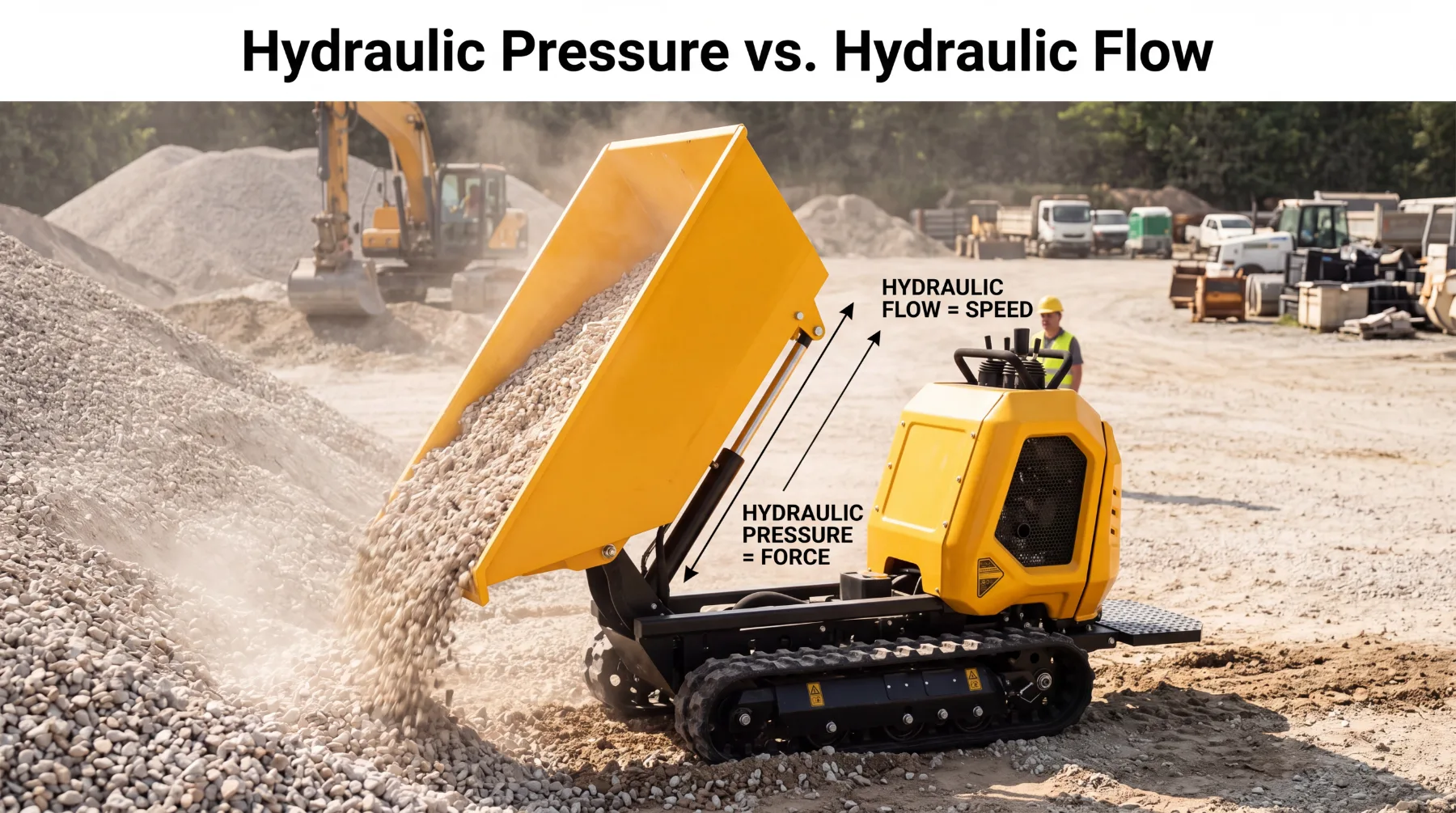
Pressure and flow perform different roles in a hydraulic system, and understanding the distinction clears up much of the confusion surrounding how these machines work. Pressure relates to the force available to move a load, while flow affects how quickly the hydraulic components can move. The two work together in every dump cycle, but they answer very different questions. Pressure asks how much force the system can generate, and flow asks how fast the cylinders can extend.
A simple way to hold the difference in mind is to think about what each one controls:
- Pressure determines the force the system can apply, which governs how heavy a load the dumper can raise
- Flow determines how much fluid reaches the cylinders over time, which governs how quickly the bed lifts and tips
Both matter, and neither tells the full story on its own. A system with high pressure but low flow could lift a heavy load slowly, while a system with high flow but limited pressure could move quickly but struggle with weight. The performance an operator actually experiences comes from how pressure and flow combine to meet the demands of the work.
Recognizing this relationship helps make sense of how the dumper behaves. When the bed rises slowly under a heavy load, the system is generating the pressure needed to produce force, and the pace reflects the flow available to move the cylinders. Seeing pressure and flow as partners rather than a single quality gives you a more accurate picture of the hydraulic system and how it delivers both the force and the speed the machine needs.
How Load Weight Affects Hydraulic Demand
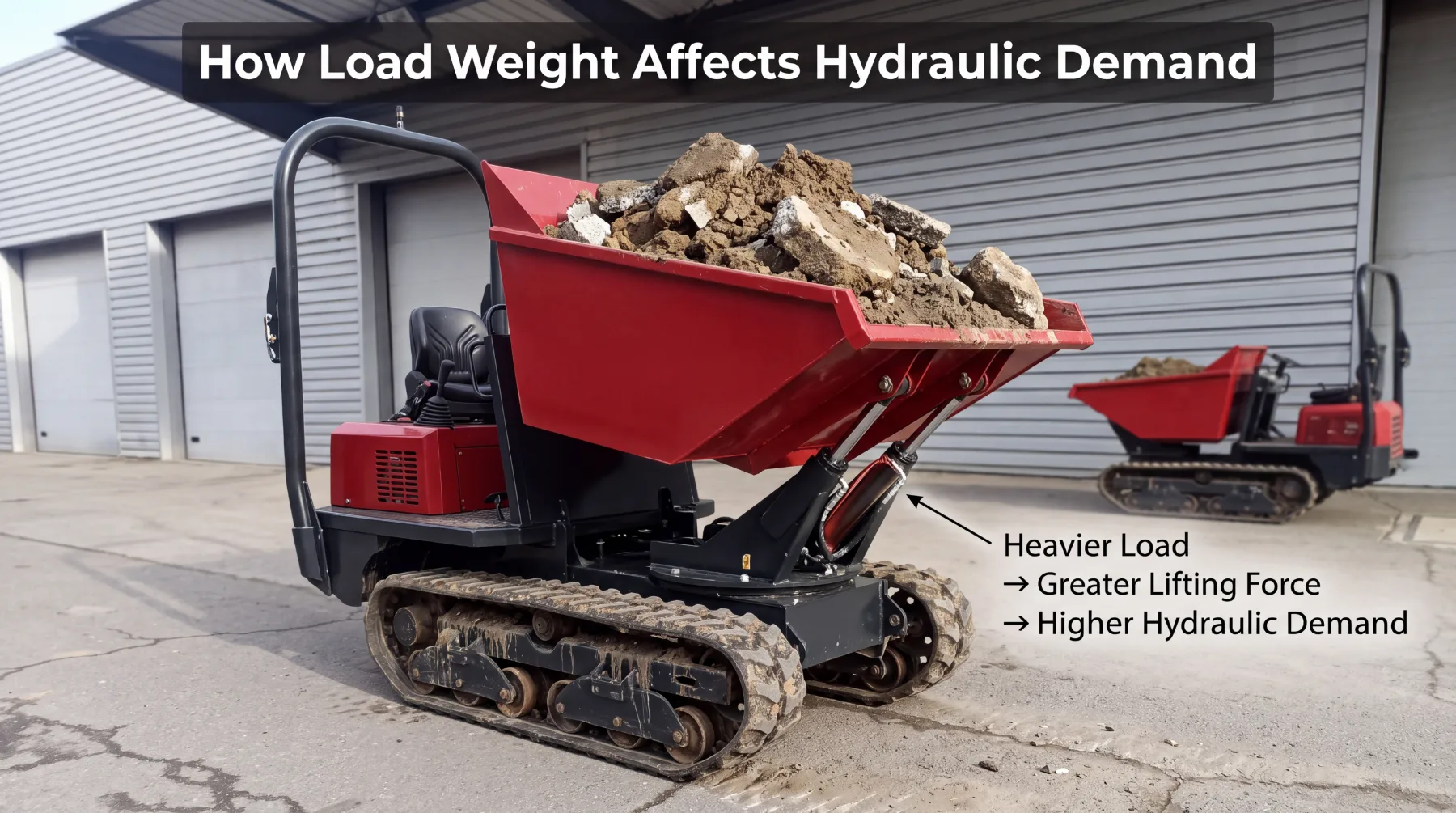
Load weight has a direct effect on how hard the hydraulic system has to work. A heavier load increases the force required to raise the dump bed, which places greater demand on the hydraulics. As the weight in the bed grows, the cylinders must generate more force to lift it, and the system responds by building higher pressure to meet that demand. This is normal behavior, and it explains why the machine feels different when tipping a full load compared with a light one.
The relationship between load and hydraulic demand is worth keeping in mind during everyday operation. When the system works near the upper end of its capacity, the components experience greater stress, and the pace of the dump cycle may change to reflect the heavier demand. Staying within the dumper's rated capacity helps keep hydraulic components operating within their intended working conditions, which protects the system and supports consistent performance over time.
Respecting the rated capacity is one of the most practical ways to care for the hydraulics. Loading the dumper beyond its designed limit forces the system to generate pressure and force beyond what the components were built to handle regularly, which adds unnecessary strain and can shorten their service life. Working within the rated capacity keeps the pressure demand in a healthy range and lets the system deliver reliable lifting cycle after cycle. When you match your loads to what the machine is designed to carry, the hydraulics perform dependably and the dumper handles material the way it was meant to, giving you steady results you can count on across a full working day.
Hydraulic Components That Control Pressure
The hydraulic system relies on several components working together, and each contributes to how well the machine generates and controls pressure. The pump, valves, cylinders, hoses, and fittings all play a part in delivering fluid, building pressure, and directing force to where it is needed. When these components function correctly and work in harmony, the dumper lifts and tips smoothly, with the pressure and flow the task requires reaching the cylinders as intended.
Each component carries a specific responsibility within the system:
- Pump, which moves fluid through the system and provides the flow that drives the hydraulic functions
- Valves, which direct fluid to the right places and help control pressure and movement
- Cylinders, which convert hydraulic pressure into the mechanical force that raises the bed
- Hoses and fittings, which carry pressurized fluid throughout the system and must hold that pressure securely
Because these parts depend on one another, a problem with any single component can affect the whole system. A worn pump may struggle to deliver adequate flow, a faulty valve can disrupt how pressure is directed, and a leaking hose or fitting can lower system pressure and reduce lifting force. Any of these issues can show up as weaker pressure, unusual lifting behavior, or a slower dump cycle.
Knowing how these components contribute helps you understand what to check when performance changes. If the bed lifts more slowly than usual or struggles under a load it once handled easily, the cause often lies with one of these parts. Recognizing the role each component plays makes it easier to spot developing problems and keep the hydraulic system delivering the pressure and force the dumper depends on.
Maintaining Reliable Hydraulic Performance
Keeping the hydraulic system in good condition is the surest way to protect the dumper's performance over the long term. Regularly checking hydraulic fluid, hoses, fittings, cylinders, and connections helps identify leaks or wear before they affect operation. Because the hydraulics work under pressure and endure repeated cycles, small issues develop gradually, and catching them early keeps them from turning into problems that stop the machine or require expensive repair.
A dependable maintenance routine focuses on a few consistent checks:
- Hydraulic fluid, which should be kept at the proper level and in good condition, since fluid is the medium that carries pressure through the system
- Hoses and fittings, which should be inspected for leaks, cracks, or damage that could reduce pressure or allow fluid to escape
- Cylinders, which should be checked for leaks and smooth operation, as they generate the force that raises the bed
- Connections, which should be confirmed as secure to keep the system sealed and holding pressure
Each of these checks contributes to steady, reliable operation. Fluid at the correct level keeps the system working as designed, sound hoses and fittings keep pressure contained, and cylinders in good condition deliver consistent lifting force. Confirming that connections are secure helps the system hold pressure the way it should throughout every cycle.
Following the manufacturer's maintenance requirements is essential for maintaining consistent hydraulic performance. The manufacturer's guidance reflects how the specific machine is built and what it needs to keep running well, so following those intervals and procedures gives you a dependable foundation for care. When you combine regular inspection with the manufacturer's recommendations, you keep the hydraulic system healthy and the dumper ready to handle material reliably.
Conclusion
Hydraulic pressure sits at the core of how a compact dumper does its work, generating the force that raises and tips a loaded bed. Pressure provides the force while flow governs the speed, and the two work together to deliver the performance you feel during each cycle. Load weight drives the pressure the system must generate, which is why staying within the rated capacity matters so much. The pump, valves, cylinders, hoses, and fittings all shape how pressure is built and controlled, and consistent maintenance keeps every part of that system working as it should.
Before your next job or service interval, take time to understand how your dumper's hydraulics respond to the loads you handle, and build regular inspection into your routine. Check the fluid, hoses, fittings, cylinders, and connections, and follow the manufacturer's maintenance guidance closely. When you understand the system and care for it consistently, you gain a compact dumper that performs reliably and handles material dependably for years of demanding work.
Frequently Asked Questions
1. What does hydraulic pressure actually do in a compact dumper?
Hydraulic pressure provides the force needed to operate the dumper's key functions, most importantly lifting the dump bed and driving the hydraulic components that make the machine work. When you engage the tip function, the hydraulic system pressurizes fluid and delivers it to the cylinders, which push the bed upward against the weight of the material inside. That force is what allows a relatively small machine to raise and empty heavy loads with ease, since without adequate pressure the cylinders could not generate the force a full bed requires. Pressure builds because the fluid meets resistance as it works. When the cylinders push against the load, the fluid pressurizes to overcome that resistance, and the pressure rises in step with the force the task demands. This is why a heavier load produces higher pressure than a light one, as the hydraulics respond to the work being asked of them. Understanding this helps operators recognize the demands placed on the system during material handling, giving them a better feel for how the machine is performing and where its limits lie, which supports smoother, more confident operation.
2. What is the difference between hydraulic pressure and hydraulic flow?
Pressure and flow perform different roles in a hydraulic system, and understanding the distinction clears up much of the confusion around how these machines work. Pressure relates to the force available to move a load, so it determines how heavy a load the dumper can raise. Flow relates to how much fluid reaches the cylinders over time, so it governs how quickly the bed lifts and tips. The two work together in every dump cycle but answer very different questions: pressure asks how much force the system can generate, while flow asks how fast the cylinders can move. Both matter, and neither tells the full story on its own. A system with high pressure but low flow could lift a heavy load slowly, while a system with high flow but limited pressure could move quickly yet struggle with weight. The performance an operator experiences comes from how pressure and flow combine to meet the demands of the work. Seeing them as partners rather than a single quality gives you a more accurate picture of how the hydraulic system delivers both the force and the speed the machine needs.
3. How does load weight affect the hydraulic system?
Load weight has a direct effect on how hard the hydraulic system has to work. A heavier load increases the force required to raise the dump bed, which places greater demand on the hydraulics. As the weight in the bed grows, the cylinders must generate more force to lift it, and the system responds by building higher pressure to meet that demand. This is normal behavior and explains why the machine feels different when tipping a full load compared with a light one. When the system works near the upper end of its capacity, the components experience greater stress, and the pace of the dump cycle may change to reflect the heavier demand. Staying within the dumper's rated capacity helps keep hydraulic components operating within their intended working conditions, which protects the system and supports consistent performance. Loading beyond the designed limit forces the system to generate pressure and force beyond what the components were built to handle regularly, adding unnecessary strain that can shorten their service life. Matching your loads to what the machine is designed to carry keeps the pressure demand healthy and lets the hydraulics deliver reliable lifting cycle after cycle.
4. Which components control hydraulic pressure in a compact dumper?
Several components work together to generate and control hydraulic pressure, and each carries a specific responsibility. The pump moves fluid through the system and provides the flow that drives the hydraulic functions. The valves direct fluid to the right places and help control pressure and movement. The cylinders convert hydraulic pressure into the mechanical force that raises the bed, and the hoses and fittings carry pressurized fluid throughout the system while holding that pressure securely. Because these parts depend on one another, a problem with any single component can affect the whole system. A worn pump may struggle to deliver adequate flow, a faulty valve can disrupt how pressure is directed, and a leaking hose or fitting can lower system pressure and reduce lifting force. Any of these issues can show up as weaker pressure, unusual lifting behavior, or a slower dump cycle. Knowing how these components contribute helps you understand what to check when performance changes. If the bed lifts more slowly than usual or struggles under a load it once handled easily, the cause often lies with one of these parts, and recognizing their roles makes developing problems easier to spot.
5. How do I keep my dumper's hydraulic system running reliably?
Keeping the hydraulic system reliable comes down to regular inspection combined with following the manufacturer's guidance. Check the hydraulic fluid, hoses, fittings, cylinders, and connections routinely to identify leaks or wear before they affect operation, since the hydraulics work under pressure and endure repeated cycles that cause small issues to develop gradually. Start with the hydraulic fluid, keeping it at the proper level and in good condition, because fluid is the medium that carries pressure through the system. Inspect hoses and fittings for leaks, cracks, or damage that could reduce pressure or let fluid escape, and check the cylinders for leaks and smooth operation, since they generate the force that raises the bed. Confirm that connections are secure so the system stays sealed and holds pressure the way it should. Following the manufacturer's maintenance requirements is essential, because that guidance reflects how the specific machine is built and what it needs to keep running well. Combining regular inspection with the manufacturer's recommended intervals and procedures gives you a dependable foundation for care that keeps the hydraulic system healthy and the dumper ready to handle material reliably.
Need help turning this research into a real quote request?
Send the machine category, intended use, or product name to the KUVUO team and we can help you take the next step.
Contact KUVUO