
Battery voltage sits at the core of how an electric forklift performs, yet it is one of the most misunderstood specifications on the spec sheet. It shapes how the machine accelerates, how confidently it raises a heavy load, and how steadily it holds up through a long shift. Many buyers assume a higher voltage number always means a better, longer-running machine, but the truth is more layered than that. Understanding how voltage really works helps you choose equipment that fits your operation and keeps your work moving reliably.
This guide explains why electric forklift voltage matters for machine performance. You will learn how voltage powers the drive and lifting systems, why it represents only one part of battery capacity, how it shapes lifting and driving under load, what charging requirements come with different voltage systems, and how to match voltage to your application. By the end, you will have a clear, practical view of what to weigh before choosing a machine.
Voltage and Motor Performance
The battery voltage supplies electrical power to the forklift's drive and lifting systems, making it a foundational part of how the machine performs. Each time the operator accelerates, steers, or raises a load, the battery delivers electrical energy that the motors convert into movement and lifting force. Voltage represents the electrical pressure behind that energy, and it plays a central role in how readily power reaches the components doing the work. Without adequate voltage, the systems that drive and lift cannot perform to their full potential, and the operator feels that shortfall in every task.
Voltage on its own, though, does not tell the complete story. The voltage level works together with motor and controller design to determine how the machine actually delivers power during operation. The motor converts electrical energy into mechanical work, and its design affects how efficiently that conversion happens. The controller manages the flow of power between the battery and the motor, regulating how energy is delivered as demands rise and fall throughout a shift. These three elements form a system, and their combined design shapes the performance the operator experiences behind the controls.
This relationship deserves attention because two forklifts with the same voltage can perform quite differently depending on how their motors and controllers are engineered. A well-matched system delivers power smoothly and responsively, giving the operator confident control over both travel and lifting. A poorly matched one can feel sluggish or inconsistent even when the voltage looks adequate on paper. When evaluating an electric forklift, it helps to treat voltage as part of a complete powertrain rather than a single figure. Looking closely at how the voltage, motor, and controller are designed to work together gives a far clearer picture of how the machine will handle the real demands of your operation.
Voltage Affects Battery Capacity
Voltage is one part of the battery system's overall energy capacity, but its importance is easy to overstate when viewed in isolation. A widespread misconception holds that a higher-voltage system automatically means longer runtime, when in fact voltage is only one factor in how much work a battery can deliver between charges. To understand runtime with any accuracy, you have to look at the full picture of the battery system rather than fixating on a single specification.
Battery capacity, measured in amp-hours, describes how much electrical charge the battery can store and supply over time. Two systems can share the exact same voltage yet offer very different amp-hour ratings, and the one with greater capacity will generally run longer under similar conditions. Energy use plays an equally decisive role. A forklift performing heavy, frequent lifting draws far more energy than one handling light, occasional loads, so actual runtime depends heavily on how the machine is used across the working day.
Taken together, these factors explain why voltage should never be judged on its own when estimating how long a machine will operate:
- Voltage reflects the electrical pressure behind the power the battery delivers
- Amp-hour capacity determines how much charge the battery can store and supply
- Energy use depends on the tasks, loads, and hours the forklift works
When you weigh these elements as a group, you form a realistic expectation of runtime instead of relying on voltage as a shortcut. A machine with a modest voltage but generous amp-hour capacity may well outlast a higher-voltage machine fitted with a smaller battery under the same workload. Considering voltage alongside capacity and expected energy use is the dependable way to judge whether a forklift will keep working as long as your operation demands.
Impact on Lifting and Driving
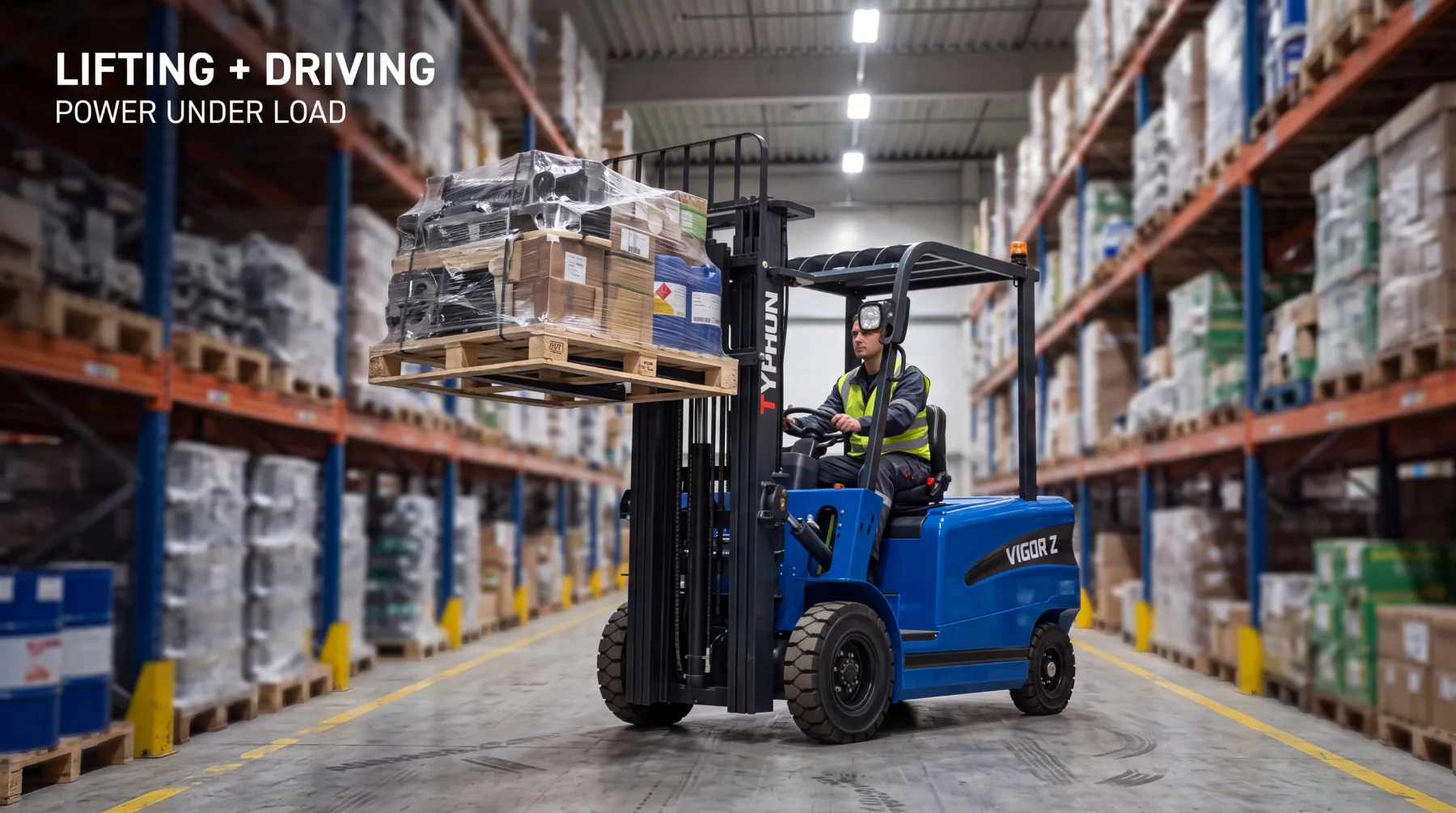
The electrical system must provide suitable power for both travel and hydraulic lifting demands, and these two functions place distinctly different loads on the battery and motors. Driving requires steady power to move the machine and its load across the floor, accelerate, and maintain a controlled pace. Lifting draws on the hydraulic system to raise loads, often demanding a surge of power as the forks rise with a heavy weight. The electrical system has to serve both, sometimes at the same moment, which makes its overall capability essential to smooth, reliable operation.
Performance under these demands depends on the relationship between several factors working together. Voltage supplies the electrical pressure, current reflects the flow of power the system draws, motor efficiency determines how effectively that power converts into useful work, and the load defines how much is being asked of the machine at any given moment. How these elements interact shapes how the forklift performs under different working conditions. A machine handling light loads on level ground places modest demands on the system, while one lifting near its rated capacity or working continuously asks far more of it.
This interplay becomes most apparent when conditions grow demanding. A forklift lifting a heavy load draws significant current, and if the system is well matched, it delivers that power without straining, keeping both the lift and any simultaneous travel smooth and controlled. A poorly matched system may struggle under the same demand, showing slower lifts or reduced responsiveness when the load is heaviest. Recognizing that voltage, current, motor efficiency, and load all contribute to performance helps you evaluate whether a forklift can handle your typical work. A machine whose electrical system is genuinely suited to your lifting and driving demands performs consistently across the full range of tasks your operation involves, day after day.
Charging Requirements
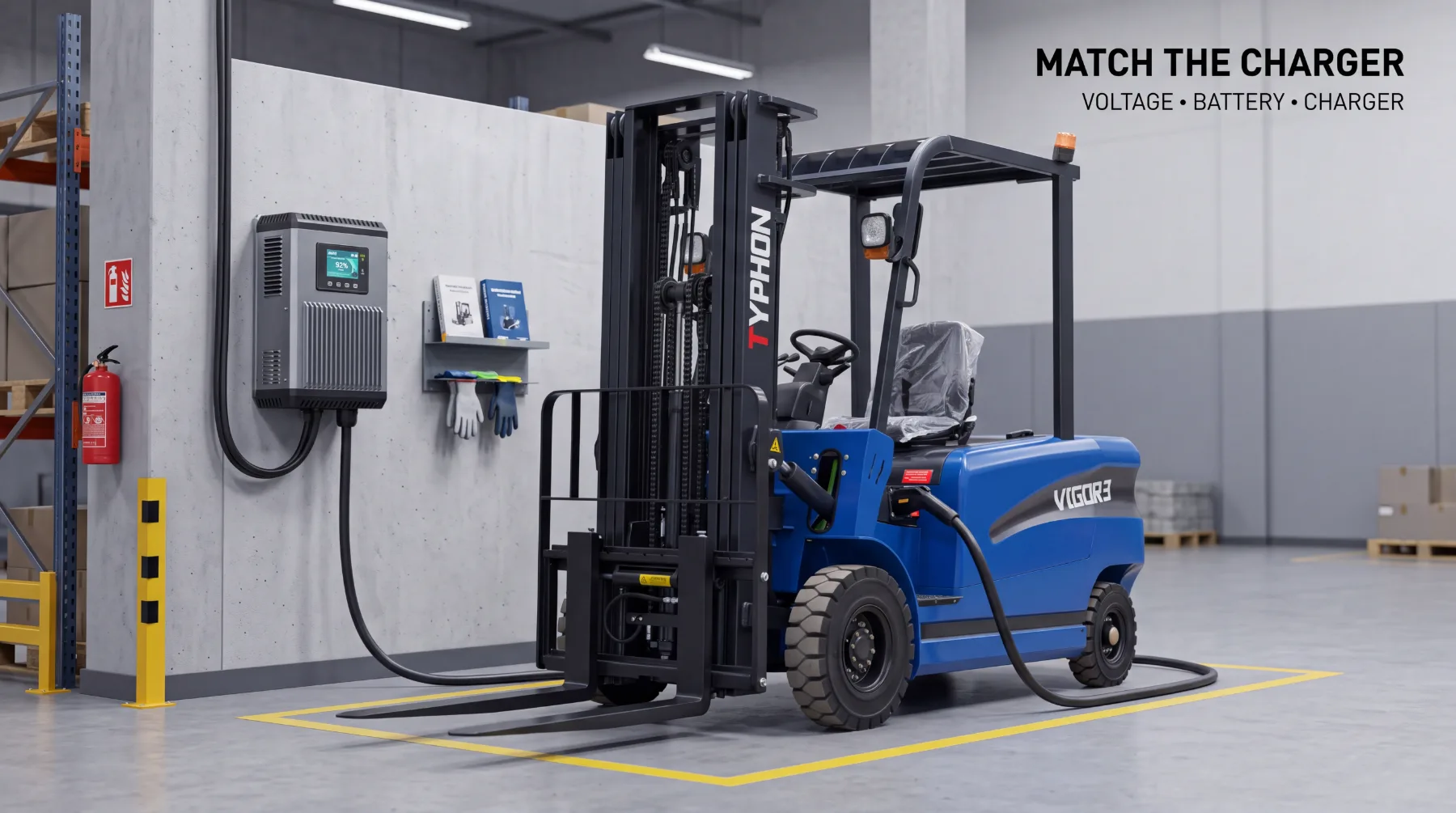
Different voltage systems require compatible charging equipment and battery configurations, and matching them correctly is essential to dependable operation. A charger designed for one voltage cannot simply serve a battery of another, since the charging equipment must align with the specific voltage and configuration of the battery it supports. This means that when you select a forklift with a particular voltage system, you are also committing to charging equipment built to match it. Overlooking this connection can lead to poor charging performance or, in the worst cases, damage to the battery itself.
Choosing the correct charger helps maintain proper charging performance and protects the battery system across its working life. A properly matched charger delivers energy to the battery in the way it is designed to receive it, supporting full, efficient charging that keeps the machine ready for work. It also helps preserve the health of the battery, since charging equipment suited to the system reduces the risk of stress or harm that comes from mismatched or inadequate charging. Given the considerable value of a forklift battery, protecting it through correct charging is a sound investment in the machine's longevity.
The practical lesson is to treat charging as part of the overall system rather than an afterthought. When planning for an electric forklift, confirm that the charging equipment matches the battery's voltage and configuration, and consider how charging fits into the rhythm of your daily operation. A charging setup that aligns with the voltage system keeps the battery performing reliably, maintains consistent charging performance, and helps the machine stay available when your work demands it. Getting this match right from the start spares you the trouble and cost of charging problems later and keeps your operation running smoothly.
Matching Voltage to the Application
Selecting the right voltage for an electric forklift comes down to matching the electrical system to the real demands of the work, and no single voltage suits every operation. A machine used for light, intermittent tasks has very different needs from one running heavy loads across long shifts. The goal is to choose a voltage system that aligns with how the forklift will actually be used, so the electrical system is neither underpowered for the work nor more than the application requires.
Several factors deserve consideration when weighing the right voltage for your operation. Thinking through how each one applies to your work leads to a sound, confident decision:
- Motor system, since the voltage should suit the motor and controller design that drive the machine's performance
- Lifting requirements, which determine how much power the forklift must deliver for its hydraulic lifting demands
- Operating hours, since longer shifts place greater demands on the battery system and its capacity
- Charging setup, which must be compatible with the chosen voltage and fit the rhythm of your daily operation
These factors work together rather than in isolation, and considering them as a connected whole is what leads to a well-suited machine. A forklift that performs heavy lifting across long hours calls for an electrical system with the voltage, capacity, and charging support to sustain that workload, while a machine handling lighter tasks may be well served by a more modest system. Matching these components helps ensure the electrical system is genuinely suited to the intended workload. When voltage, motor system, lifting demands, operating hours, and charging setup all align with your operation, the forklift delivers dependable performance shift after shift, giving you equipment you can trust to keep your work moving.
Conclusion
Voltage plays a central role in how an electric forklift performs, but it delivers its best when understood as part of a complete system rather than a single number on a spec sheet. It supplies the power that drives and lifts, yet it depends on motor and controller design to deliver that power effectively. Voltage is only one part of battery capacity, so amp-hours and energy use matter just as much when judging runtime. Under load, the interplay of voltage, current, motor efficiency, and demand shapes real performance, and every voltage system carries its own charging requirements that must be matched with care. Before selecting your next electric forklift, take an honest look at your lifting demands, operating hours, and charging setup, then weigh voltage alongside battery capacity, motor design, and charging compatibility rather than in isolation. When these elements align with your workload, you gain a machine that performs reliably and lasts.
Frequently Asked Questions
1. How does battery voltage affect an electric forklift's performance?
Battery voltage supplies the electrical power that drives the forklift's travel and lifting systems, making it foundational to overall performance. When the operator accelerates, steers, or raises a load, the battery delivers energy that the motors convert into movement and lifting force, and voltage represents the electrical pressure behind that energy. However, voltage does not act alone. It works together with motor and controller design to determine how the machine actually delivers power during operation. The motor converts electrical energy into mechanical work, and its efficiency affects how well that conversion happens, while the controller regulates the flow of power between the battery and the motor as demands change throughout a shift. These three elements form a system, and their combined design shapes what the operator experiences. Two forklifts with the same voltage can perform quite differently depending on how their motors and controllers are engineered. A well-matched system delivers power smoothly and responsively, giving the operator confident control, while a poorly matched one may feel sluggish even with adequate voltage. Treating voltage as part of a complete powertrain gives a clearer picture of how the machine will handle real work.
2. Does a higher-voltage forklift always run longer?
No, this is a common misconception worth correcting. Voltage is only one part of the battery system's overall energy capacity, and a higher-voltage system does not automatically mean longer runtime. To understand how long a machine will operate, you have to look at the full picture rather than a single figure. Battery capacity, measured in amp-hours, describes how much electrical charge the battery can store and supply over time. Two systems can share the same voltage yet offer very different amp-hour ratings, and the one with greater capacity will generally run longer under similar conditions. Energy use also plays a decisive role, since a forklift performing heavy, frequent lifting draws far more energy than one handling light, occasional loads. This means actual runtime depends heavily on how the machine is used across the day. A machine with a modest voltage but generous amp-hour capacity may well outlast a higher-voltage machine with a smaller battery under the same workload. Weighing voltage alongside amp-hour capacity and expected energy use is the dependable way to form a realistic expectation of runtime instead of relying on voltage as a shortcut.
3. How do voltage and the electrical system affect lifting and driving?
The electrical system must provide suitable power for both travel and hydraulic lifting, and these functions place different demands on the battery and motors. Driving requires steady power to move the machine and maintain a controlled pace, while lifting draws on the hydraulic system to raise loads, often demanding a surge of power as the forks rise with a heavy weight. Performance under these demands depends on the relationship between several factors: voltage supplies the electrical pressure, current reflects the flow of power drawn, motor efficiency determines how effectively that power converts into useful work, and the load defines how much is being asked of the machine. How these interact shapes performance under different conditions. A machine handling light loads on level ground places modest demands, while one lifting near its rated capacity asks far more. This becomes most apparent when conditions grow demanding. A well-matched system delivers heavy lifting power without straining, keeping both the lift and any simultaneous travel smooth and controlled. A poorly matched one may show slower lifts or reduced responsiveness when the load is heaviest. Understanding this interplay helps you judge whether a forklift can handle your typical work.
4. Why do different voltage systems need different chargers?
Different voltage systems require compatible charging equipment and battery configurations because a charger designed for one voltage cannot simply serve a battery of another. The charging equipment must align with the specific voltage and configuration of the battery it supports. This means that when you select a forklift with a particular voltage system, you are also committing to charging equipment built to match it, and overlooking this connection can lead to poor charging performance or damage to the battery. Choosing the correct charger helps maintain proper charging performance and protects the battery system over its working life. A properly matched charger delivers energy to the battery in the way it is designed to receive it, supporting full, efficient charging that keeps the machine ready for work. It also helps preserve battery health, since charging equipment suited to the system reduces the risk of stress or harm from mismatched charging. Given the considerable value of a forklift battery, protecting it through correct charging is a sound investment. Confirm that your charging equipment matches the battery's voltage and configuration, and consider how charging fits into your daily operation before committing to a machine.
5. How do I choose the right voltage for my application?
Choosing the right voltage comes down to matching the electrical system to the real demands of your work, since no single voltage suits every operation. A machine used for light, intermittent tasks has very different needs from one running heavy loads across long shifts. Several factors deserve consideration together. The motor system matters, since the voltage should suit the motor and controller design that drive performance. Lifting requirements determine how much power the forklift must deliver for its hydraulic demands. Operating hours matter too, since longer shifts place greater demands on the battery system and its capacity. Finally, the charging setup must be compatible with the chosen voltage and fit the rhythm of your daily operation. These factors work together rather than in isolation, and considering them as a connected whole leads to a well-suited machine. A forklift performing heavy lifting across long hours calls for an electrical system with the voltage, capacity, and charging support to sustain that workload, while a machine handling lighter tasks may be well served by a more modest system. When these components align, the forklift delivers dependable performance day after day.
Need help turning this research into a real quote request?
Send the machine category, intended use, or product name to the KUVUO team and we can help you take the next step.
Contact KUVUO